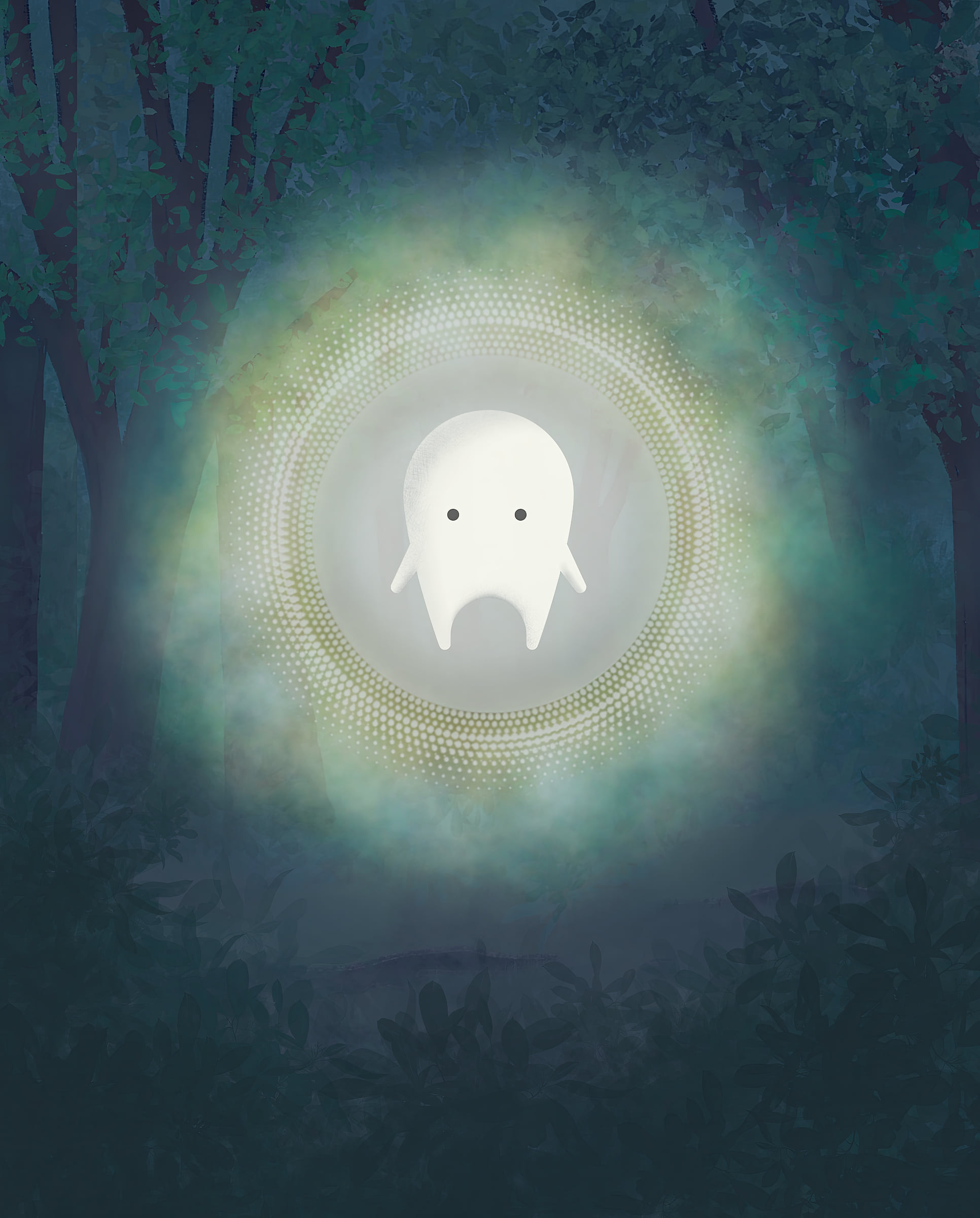
I drew the character before I knew what it was. A small, glowing shape with two dark eyes, sitting in the middle of a blank page in a sketchbook I kept by the sofa in our home. It did not look like anything I had drawn before. It looked like something that had been waiting for me to find it. That was several years ago.
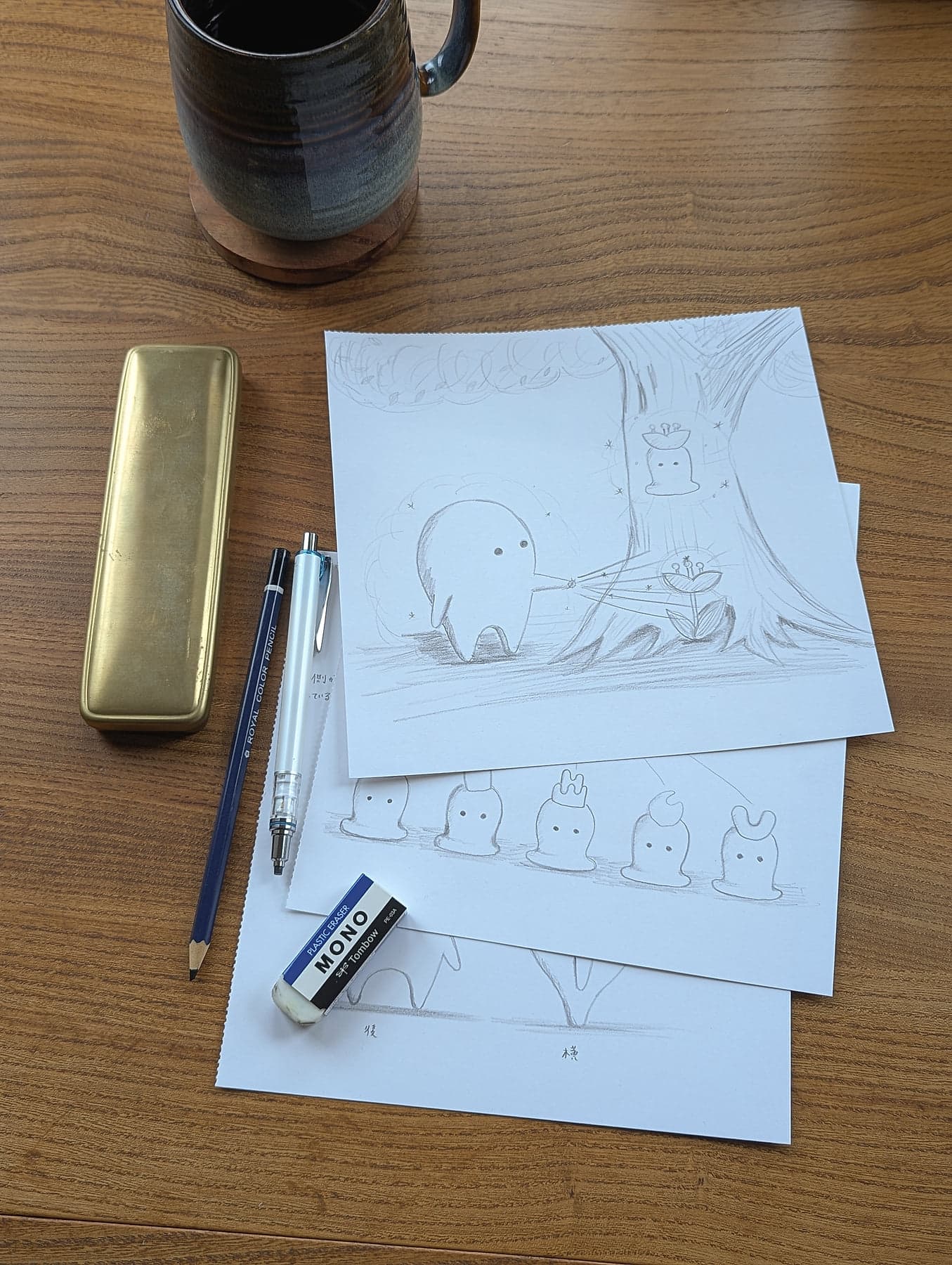
I kept drawing it. Every few days, sometimes every day, the same figure appearing in different settings: floating above a forest, standing beside a flower, surrounded by tiny creatures in the dark. I did not plan these scenes. They arrived, fully formed, the way certain dreams do. Tom would ask me what the character was, what it wanted, where it came from. I could not answer in words. I could only show him the next drawing.
The stories took shape slowly, across notebooks and loose sheets and conversations that stretched over years. Several stories. Each one following this being of light as it encounters a different part of the natural world and reveals the Kokoro within it. Kokoro (心) is the Japanese word for what English divides into heart, mind, soul, and spirit. In Japanese, these are not separate things. Kokoro is holistic: emotion, thought, and essence held together as one. It lives in the chest rather than the head, and it is felt before it is understood.
The character came from a dream. A being of light, arriving from somewhere far away, landing in a dark forest on Earth. The image was so vivid it stayed with me for days. I could see the glow against the trees, the stillness of the forest floor, this small figure standing in the middle of it all. I did not know what it meant yet. But I knew I had to follow it.
The meaning arrived later, through a question I could not stop asking. In Japanese culture there is a concept called Yaoyorozu no Kami: the understanding that a god, a spirit, exists in all things. Not only in people and animals, but in rivers, stones, an old wooden gate, the wind moving through bamboo at dusk. This is where the idea took root. If a spirit lives in all things, what if we could actually see it?
That is what Auwa does. It arrives from the stars carrying a gentle light, and when that light reaches something, the Kokoro within it becomes visible. A flower, a forest, a handful of soil, things we walk past every day without noticing. Auwa notices them. And in noticing, changes how you see them too.
“You would not throw something away if you could see its Kokoro.”
If we lived in that kind of world, where the soul in all things was visible, I think it would be a much kinder place. You would not throw something away if you could see its Kokoro. You would not ignore a person, or a river, or a forest, if you could see what lived inside it. The stories are not really about a character with magical powers, they are about paying attention, about the awareness that everything around us is alive, and connected, and worth caring for. That is what we want to bring into the world with this book.
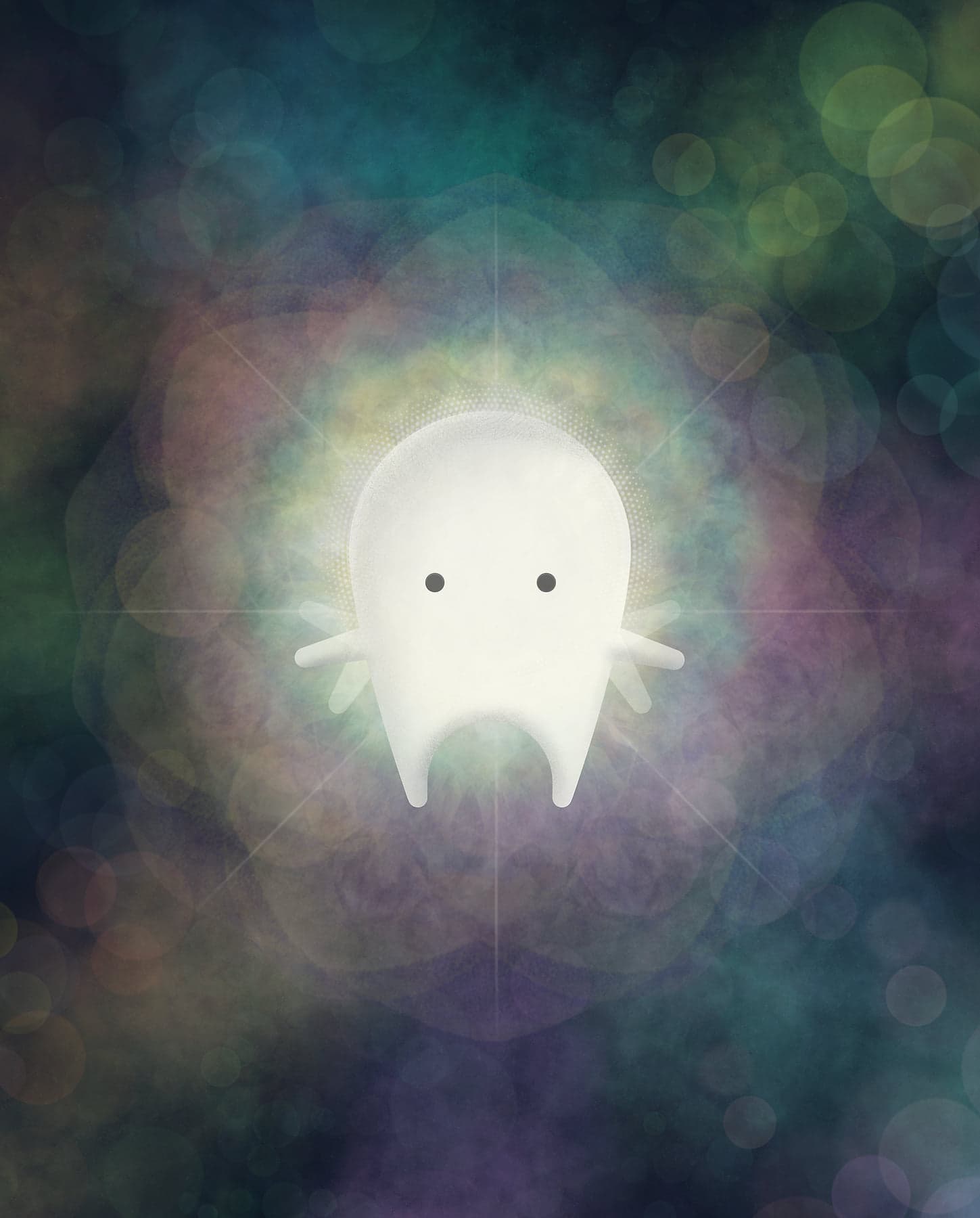
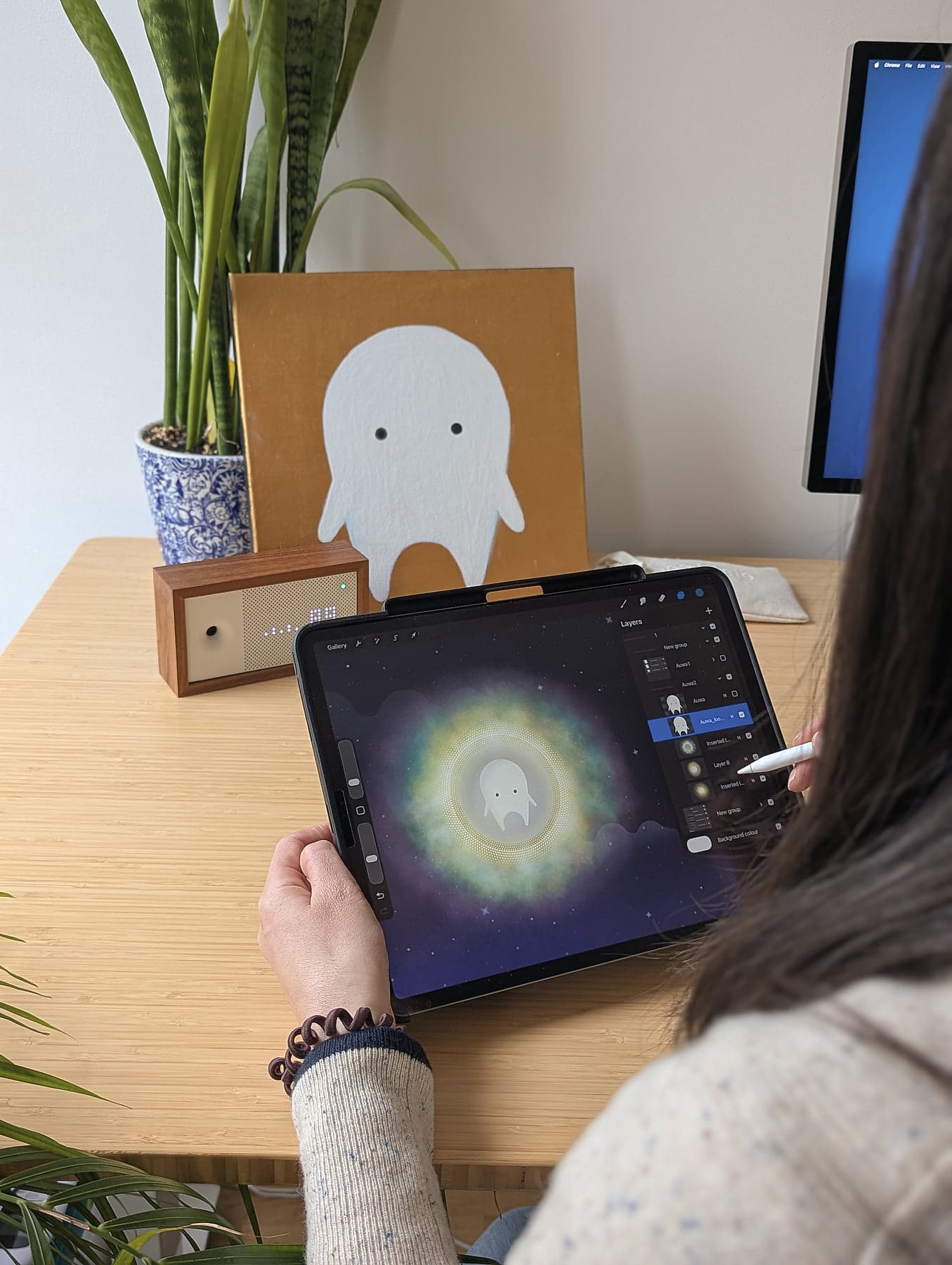
The illustration style is simple on purpose. Soft palette, gentle compositions, a character with no mouth and two dark eyes. I drew the first sketch nearly ten years ago, and the simplicity has never changed because it was never a constraint, it is the method. It looks like a children’s book, which is the point. Adults build defences around ideas about what cannot be seen. They want evidence, argument, logic, and a picture book walks straight past all of it. Charlie Mackesy understood that, and Miyazaki has understood it for decades.
The sketches came first, always in pencil. Then I moved to Illustrator, and then to Procreate on the iPad, drawing every scene with the Apple Pencil, building up the colour and light layer by layer the way I would with paint. Some of my original iterations of Auwa were on canvas. I wanted to paint so that, while working on client projects, I would not forget to properly start this. Procreate let me carry that warmth into the digital illustrations while working at the scale and detail the book needed.
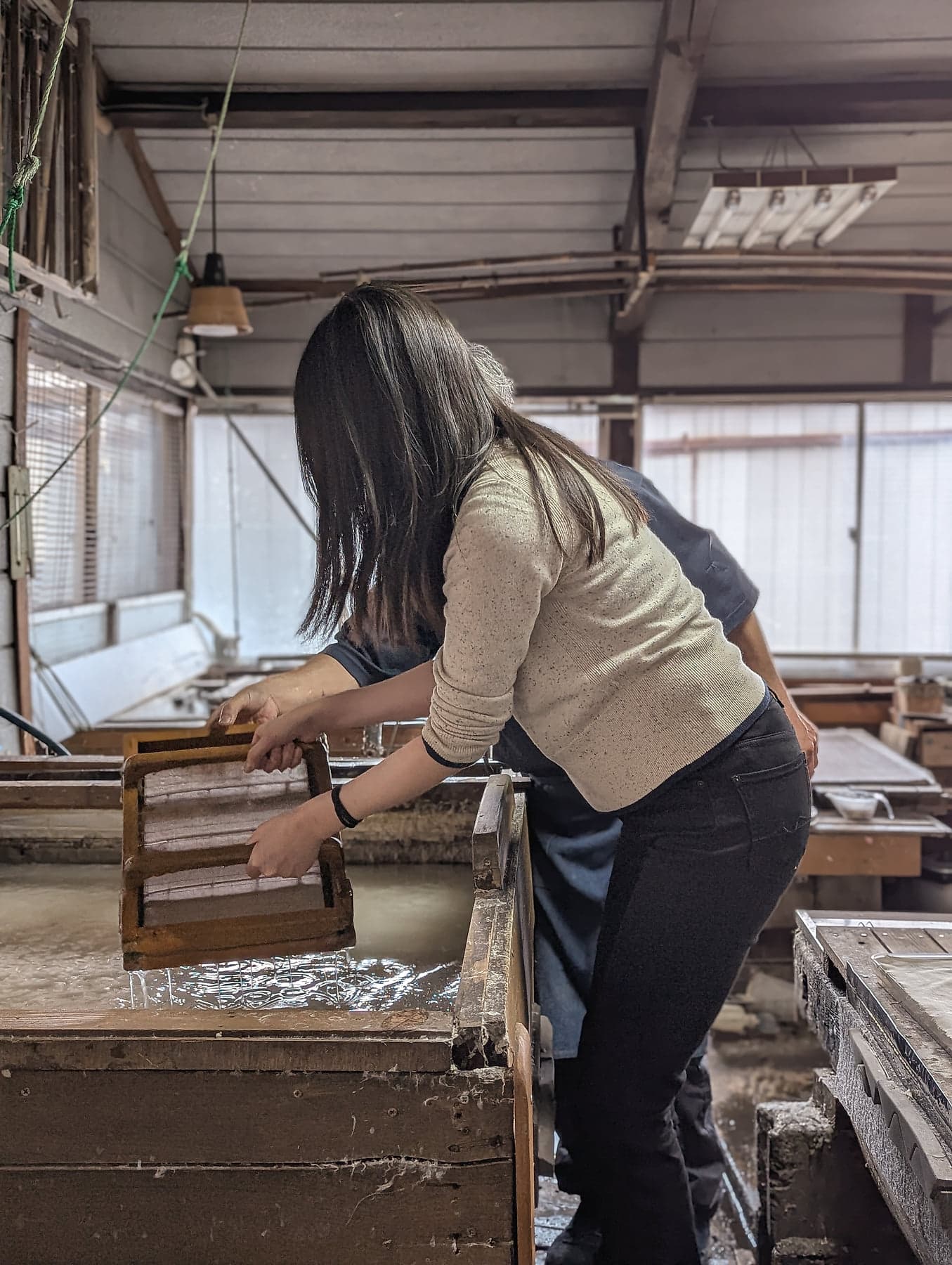
The first book is complete and will be released later this year. I am currently working on the remaining stories. There are several to come, each taking Auwa somewhere new: the ocean, the city, the stars where Auwa is from. How many there will be in the end, I do not know yet. The character has a way of deciding that for me.
Somewhere along the way, while I was working on the books, something shifted. The philosophy behind Auwa, the idea that everything around us has kokoro and is worth paying attention to, did not want to live only inside an illustrated book. It wanted to live in how you start your morning, in the objects on your shelf, in the stories you read on a quiet afternoon. The book had opened a door, and there was more on the other side of it.
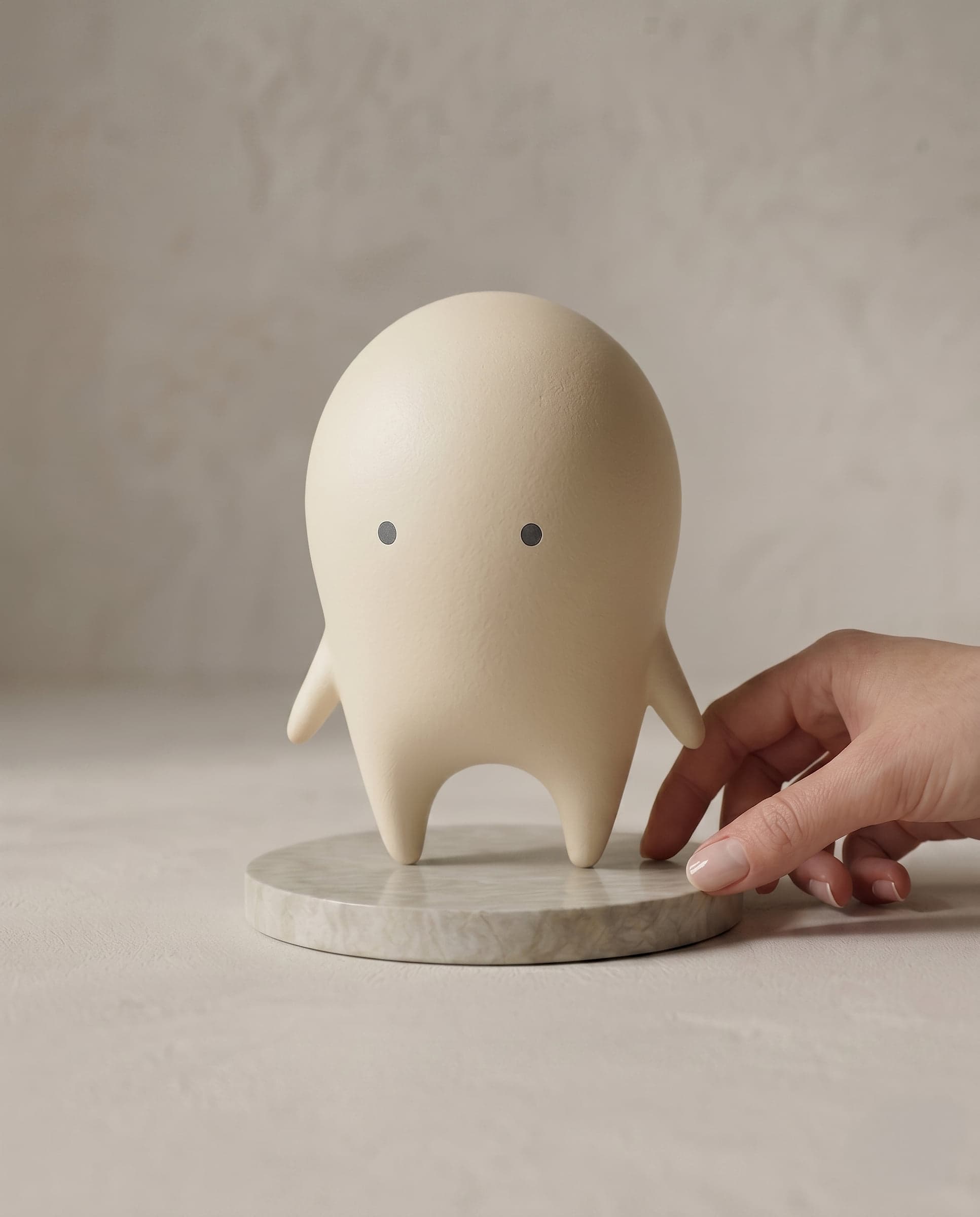
So Tom and I began building the rest. The illustrated stories came first, and they are where the character lives most fully. Then came the figure, an Auwa you can hold, printed and finished by hand in small numbered batches. And this journal, where Tom and I write in long form about Japan, about craft, about awareness, about the way the seasons turn.
The character is where it began, and the character will always be the heart of it. But Auwa is bigger than the book now. It is becoming a way of looking at the world, carried in what we make and in how slowly we make it. We hope, in time, it becomes a small part of how some people choose to live.
Auwa: The Dawn is where the illustrated stories begin, opening into a wider world we are building. Step inside to meet the character, read the philosophy behind it, and follow along as the rest unfolds.
Discover AuwaWords & photos
Rieko Maeda