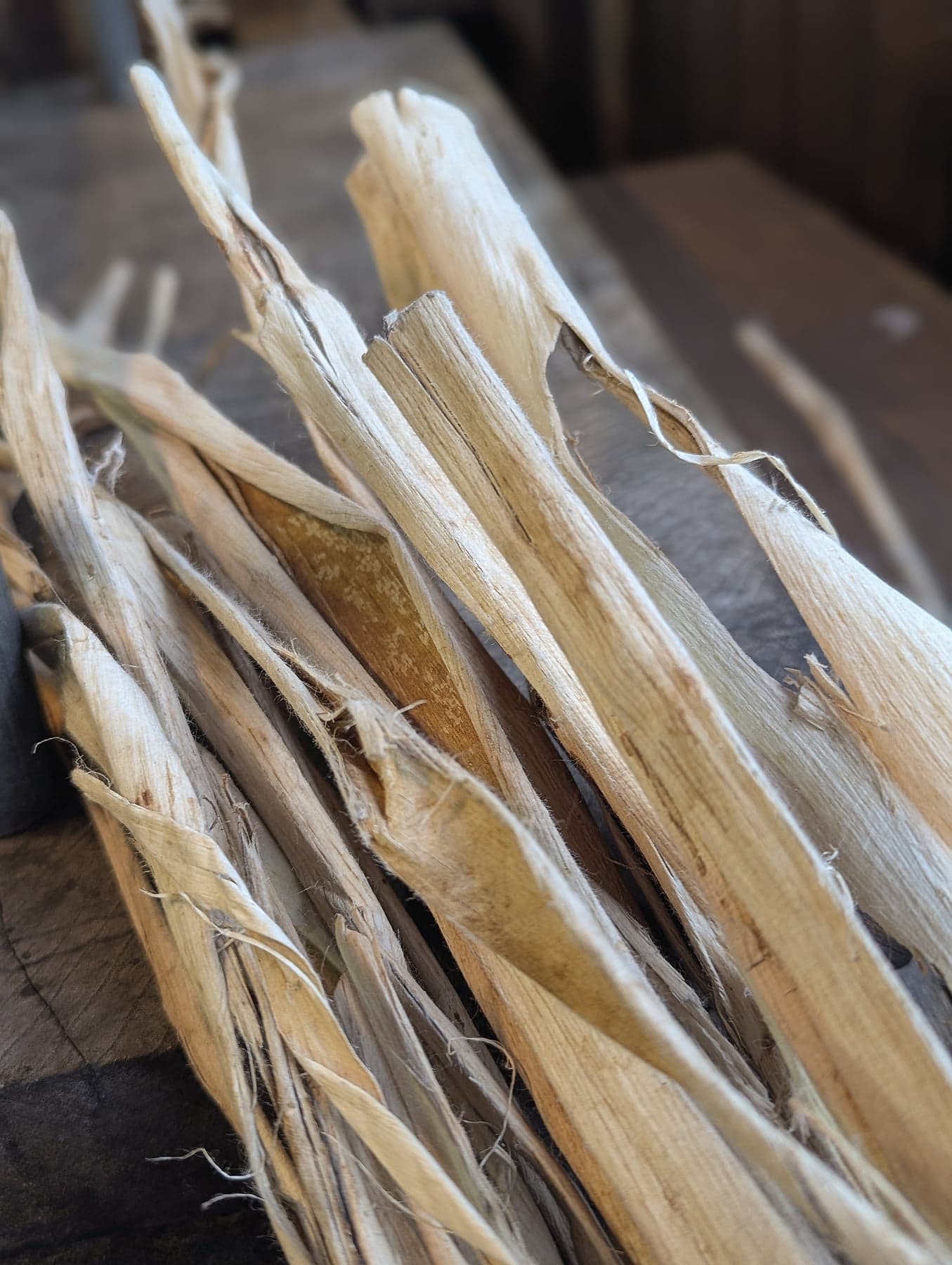
The workshop smelled of water and wood. Cold, mineral water from the Takase River, and the faint sweetness of mulberry bark that had been soaking for days in a stone trough near the entrance.
We had taken the train north from Matsumoto into the mountains of Omachi, Nagano, then from the station we followed directions to Shinshu Matsuzaki Japanese Paper. The building sat on a quiet road, very calm, with a nice atmosphere. Inside, the air was cool and fresh.
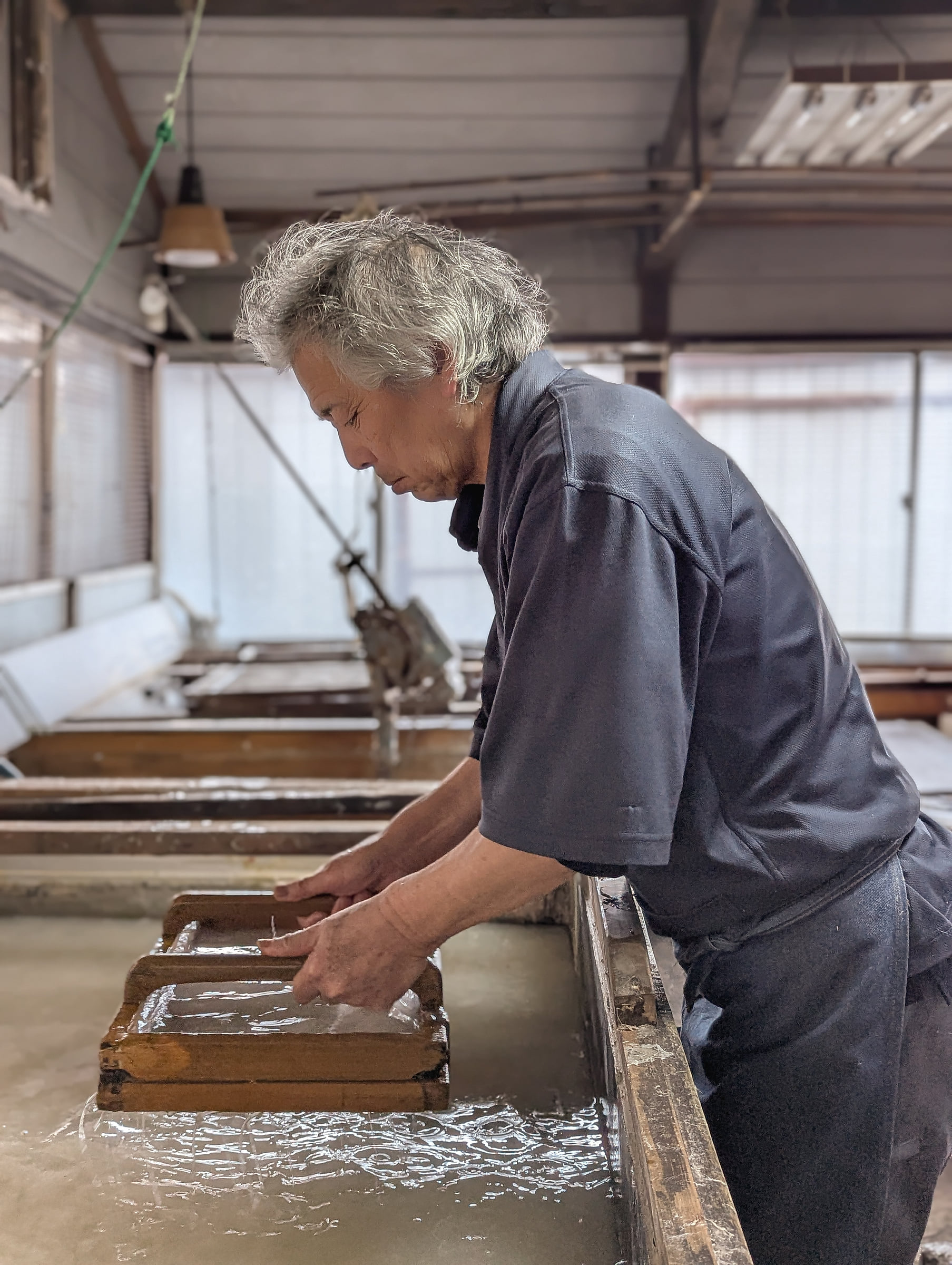
Matsuzaki-san met us in the main workshop. He explained the process simply, the way you might explain breathing. He has done it every day for decades. Washi begins as kozo, the inner bark of the mulberry tree. The fibres are stripped, soaked, boiled with wood ash, rinsed in river water, then beaten by hand until they separate into a cloudy pulp suspended in a vat of water. The vat in front of us was waist-high, wide as a dining table.
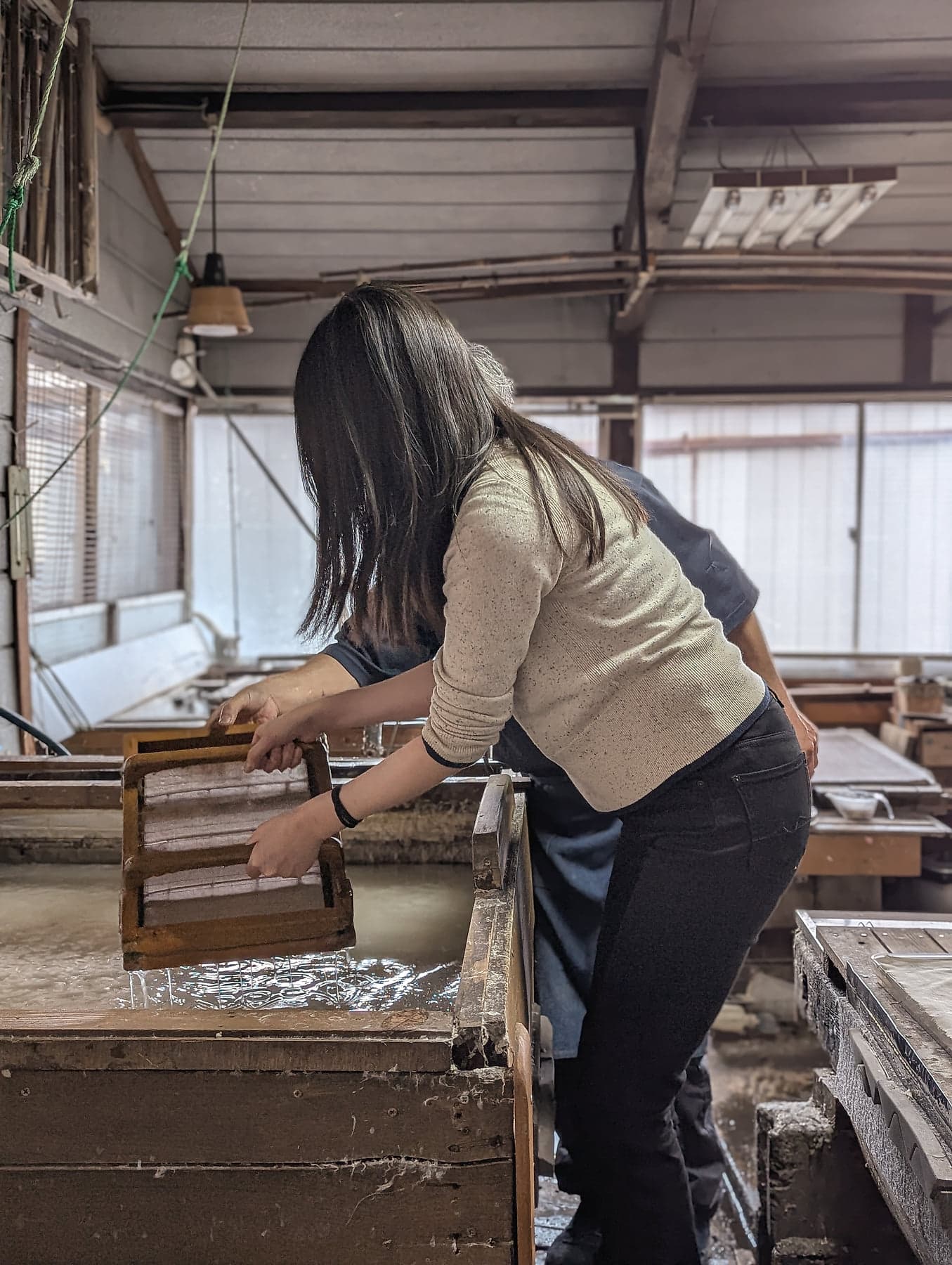
He picked up the sugeta, a wooden frame with a fine bamboo screen stretched across it, and dipped it into the vat. One smooth motion forward, a pause, then back. The pulp settled across the screen in a thin, even layer. He tilted the frame to drain, rocked it gently side to side. Then he turned the screen over onto a stack of freshly formed sheets, peeled the frame away, and the paper was there, wet and translucent and alive.
The whole thing took perhaps twenty seconds. He has been doing it since he was young. The tradition in this valley goes back to 1042, when shrine attendants at the Nishina Shinmei Shrine first made paper from wild mulberry for sacred offerings. Matsuzaki’s own workshop is younger, roughly ninety years, but the gesture is the same one those attendants practised nearly a thousand years ago: dip, settle, drain, turn.
Then it was our turn. Rieko stepped up to a smaller vat with an A4 sized frame. The motion looks simple when Matsuzaki-san does it, but it is not, because the pulp has a weight and a will of its own. Dip too fast and it floods the screen unevenly. Too slow and it settles in clumps. The wrist has to find a rhythm, a tempo that lets the fibres distribute themselves. She found it after a few attempts.
What surprised me was how physical it felt. Your hands in cold water, your forearms bracing the frame, your whole body leaning into the motion. There is no abstraction in papermaking. You are standing in a cold room, hands wet, making something one sheet at a time. The process does not scale, and does not need to.
“There is no abstraction in papermaking. You are standing in a cold room, hands wet, making something one sheet at a time.”
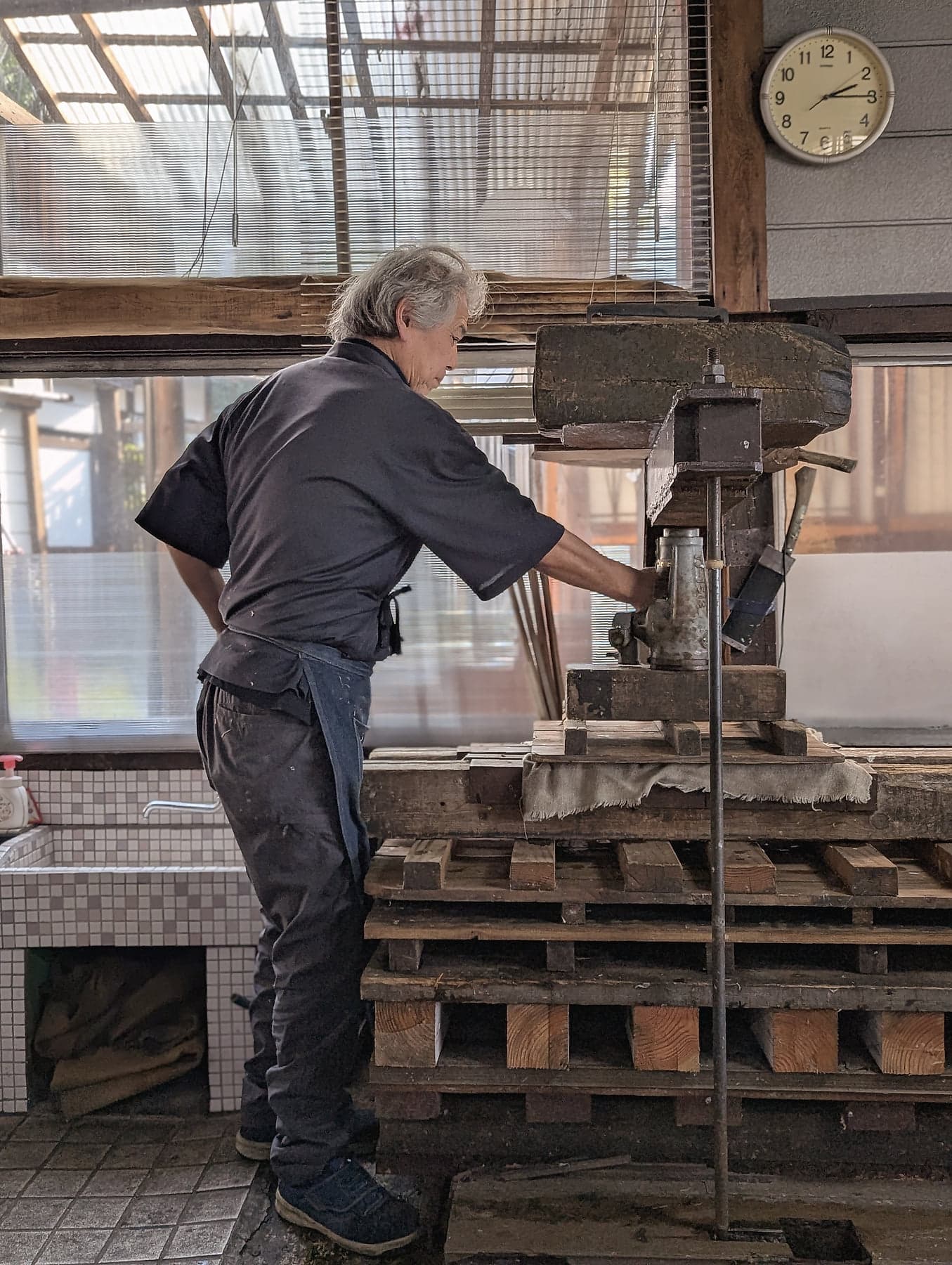
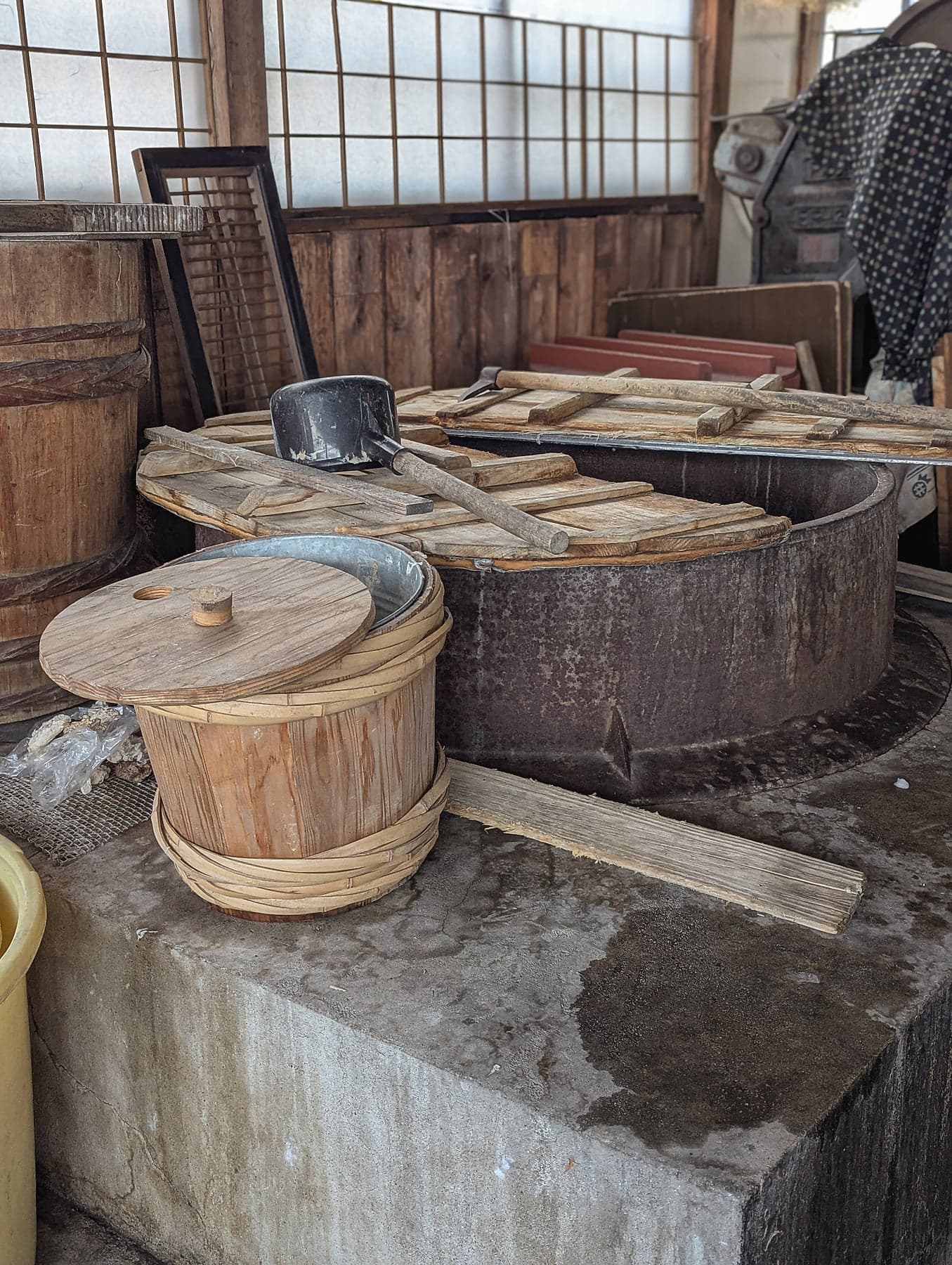
After forming, each sheet is stacked, pressed under a heavy wooden screw press to squeeze out the water, then separated and brushed onto heated drying boards one at a time. Matsuzaki-san showed us the press, a beautiful piece of old equipment. Beside it, the wooden buckets and iron cauldrons used for boiling the bark. Everything was worn smooth by use, nothing decorative, and nothing replaced that still worked.
We placed leaves and flowers into our sheets before pressing. Small maple leaves, dried petals, thin grasses. They sank into the wet pulp and became part of the paper. Not printed on, not glued. Held within the fibres themselves. When the paper dried, you could see them through it, suspended like insects in amber. Light passed through the sheet differently where a leaf sat, casting a faint green shadow.
Matsuzaki-san wants to pass this on. He said so plainly, without sentimentality. The tradition matters to him, and fewer people carry it each year. The spread of Western paper and wartime disruption reduced Omachi's papermakers from many to almost none. He opens his workshop to visitors not as a tourist attraction but as a form of continuity. Every person who dips a frame into that vat and feels the weight of the pulp settling onto the screen understands something about washi that reading cannot give them.
We left with our own handmade washi paper drying flat in a paper envelope. They are not perfect. But they are, without question, the most beautiful pieces of paper we own. You can feel the fibres when you run a finger across the surface. You can see where the mulberry bark, stripped and soaked and beaten and suspended in mountain river water, became something new without losing what it was.
A quiet settles in after making something with your hands, especially something that took your full attention. When we got back to our hotel we dried them on our window following Matsuzaki-san's instructions. The afternoon light came through the window and hit the paper where we could see the leaves inside, held there in the fibres, going nowhere. Absolutely beautiful. By late the next day, the paper was completely dry and ready for our journey home.
Words & photos
Tom Vining