The first time I entered a Japanese onsen, I had been told the rules. Wash before you get in. Small towel on your head, not in the water. Keep your voice low. Rieko had walked me through it, and I followed every step. None of that prepared me for how good it felt.
It was a small public bathhouse, the kind you find in any onsen town. No ticket booth. No attendant. Just a wooden door, a changing area, and water so hot it turns your skin pink in seconds.
You take off everything. Clothes, watch, phone. You wash at a low stool, rinse thoroughly, and lower yourself in. And what surprised me was not the heat, or the nakedness, or the fact that I was sitting with complete strangers. It was how natural it felt. Nobody stared, and nobody looked away awkwardly. People just sat in the water, breathing, quiet, sometimes releasing a long, satisfying sigh of relaxation. It felt like the most ordinary thing in the world, which is exactly what made it extraordinary.
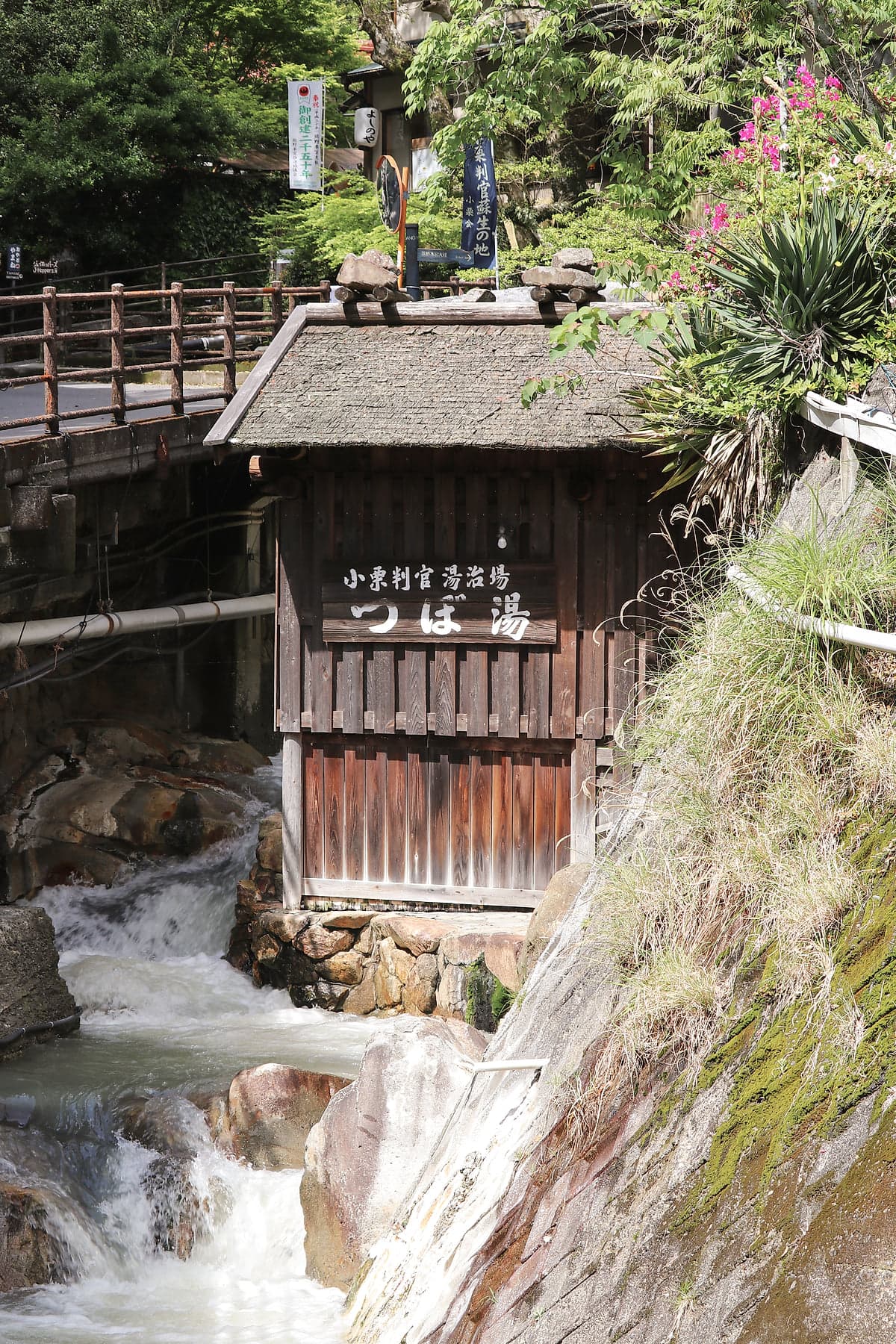
The heat is the first thing. It arrives all at once, a kind of pressure that starts at your shins and moves upward as you sink. Your breathing changes. Your shoulders, which you did not know were raised, drop. For the first minute you are aware of nothing except temperature. Then the temperature becomes normal, and you become aware of everything else.
The silence, the steam, the other bodies in the water, each one as bare and undefended as yours. There is no eye contact to speak of, no conversation beyond the occasional murmured greeting. People sit with their eyes closed, breathing. The room smells of sulphur and cedar and wet stone.
The onsen teaches something quieter than relaxation, and less packaged than wellness. It teaches you what remains when you remove everything you normally hide behind.
In daily life we carry layers, clothes and phones and the way we talk, all of them signalling something, and the onsen strips the lot. You sit in hot water with strangers and you are, for a few minutes, simply a body among bodies. Vulnerable, equal, warm.
The Japanese word hadaka (裸) means naked, but it carries a secondary meaning closer to "without pretence." Hadaka no tsukiai, the practice of "naked socialising," is an old concept. Business deals were once sealed in the bathhouse because the logic was sound: a person without clothes, without armour, without the props of their professional life, is harder to deceive and easier to trust. Not because nakedness reveals character, but because it removes the things that obscure it.
“With nothing to protect you stop watching for threats, and begin noticing instead.”
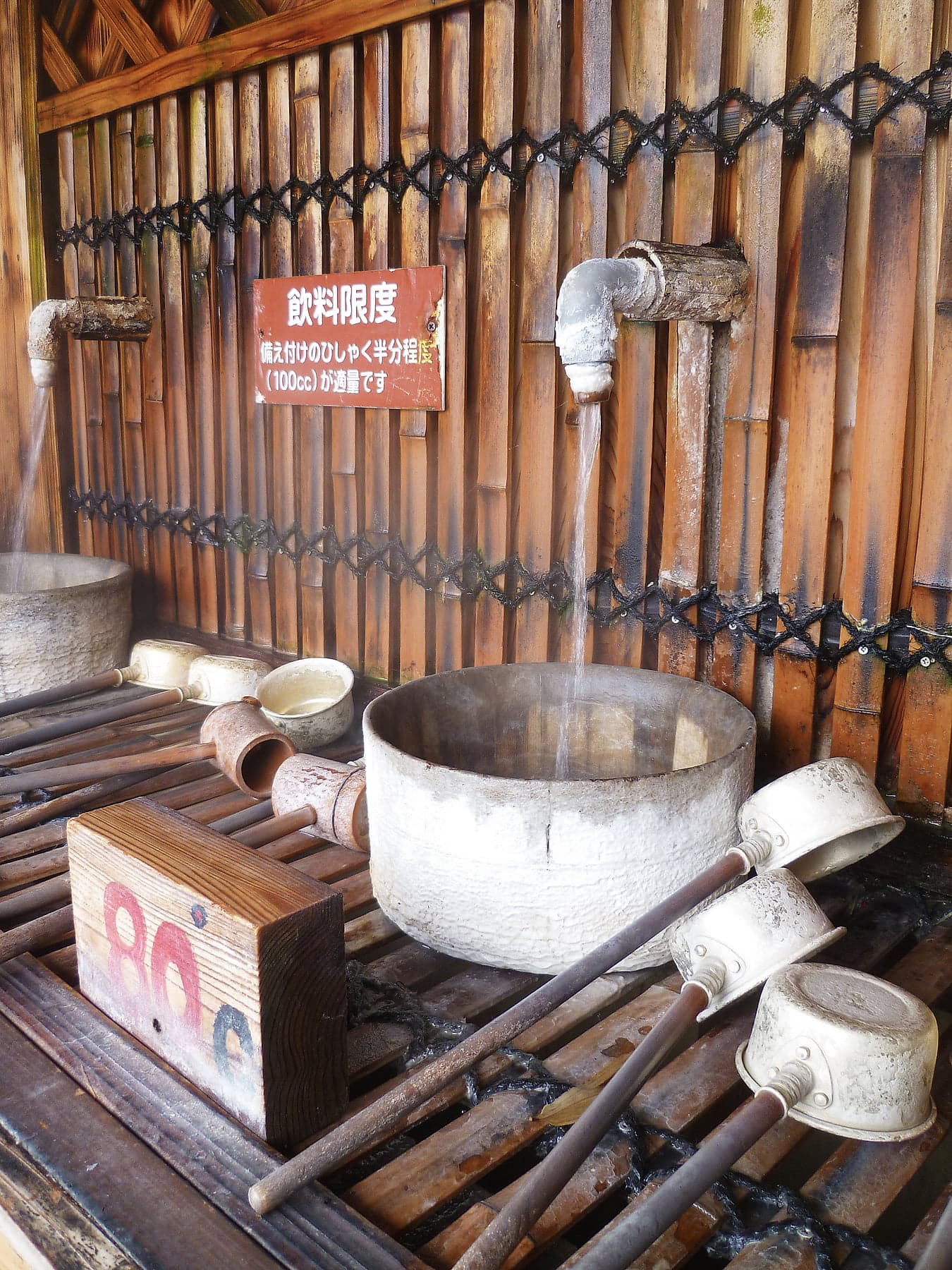
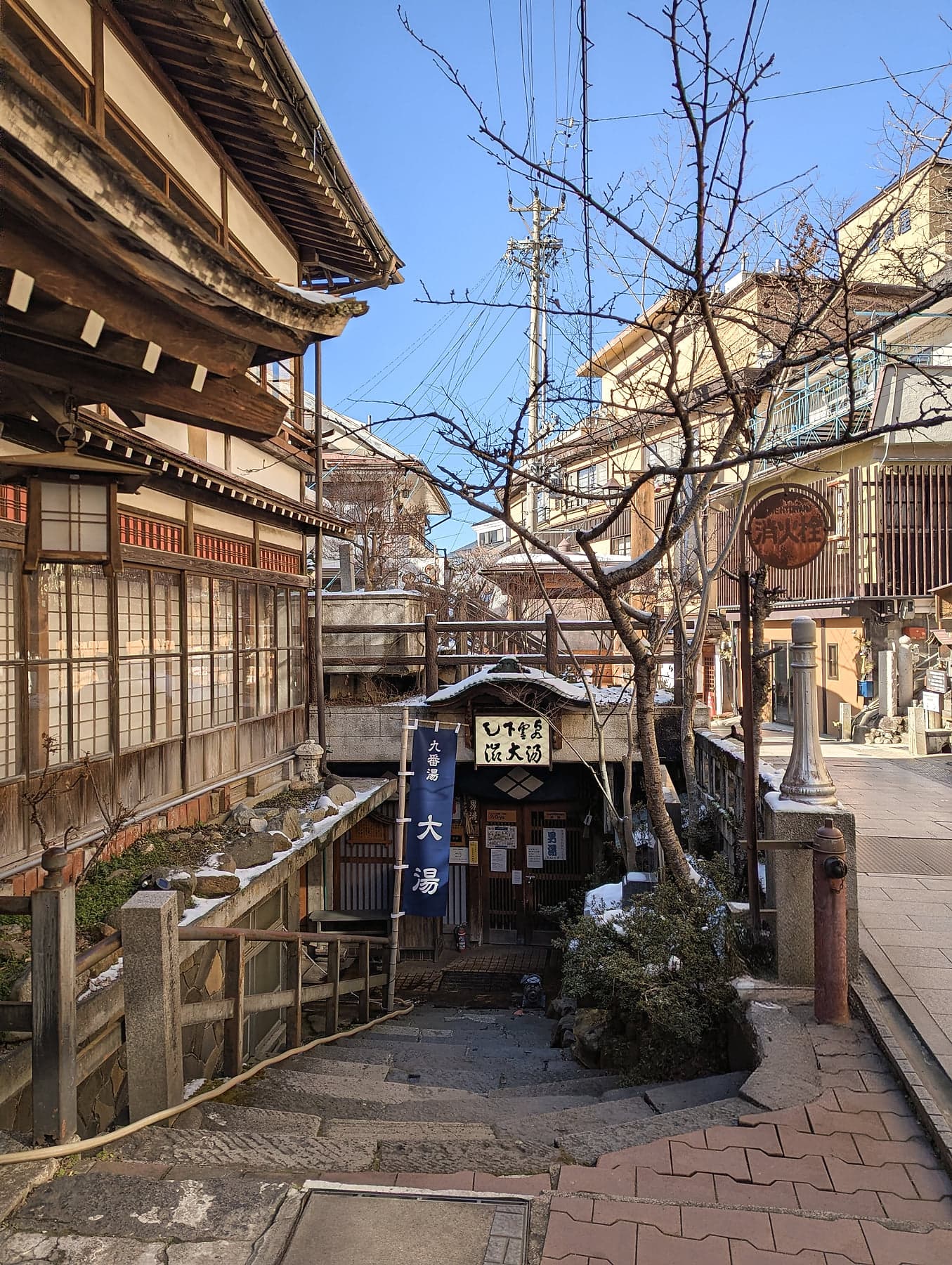
I have thought about this often since that first visit. We went back many times, to different towns, different bathhouses. Each visit, the same ritual: undress, wash, enter, sit, breathe. And each time, the same small revelation. How little you actually need. How quickly the mind quiets when the body has nowhere to go and nothing to do except be present in hot water.
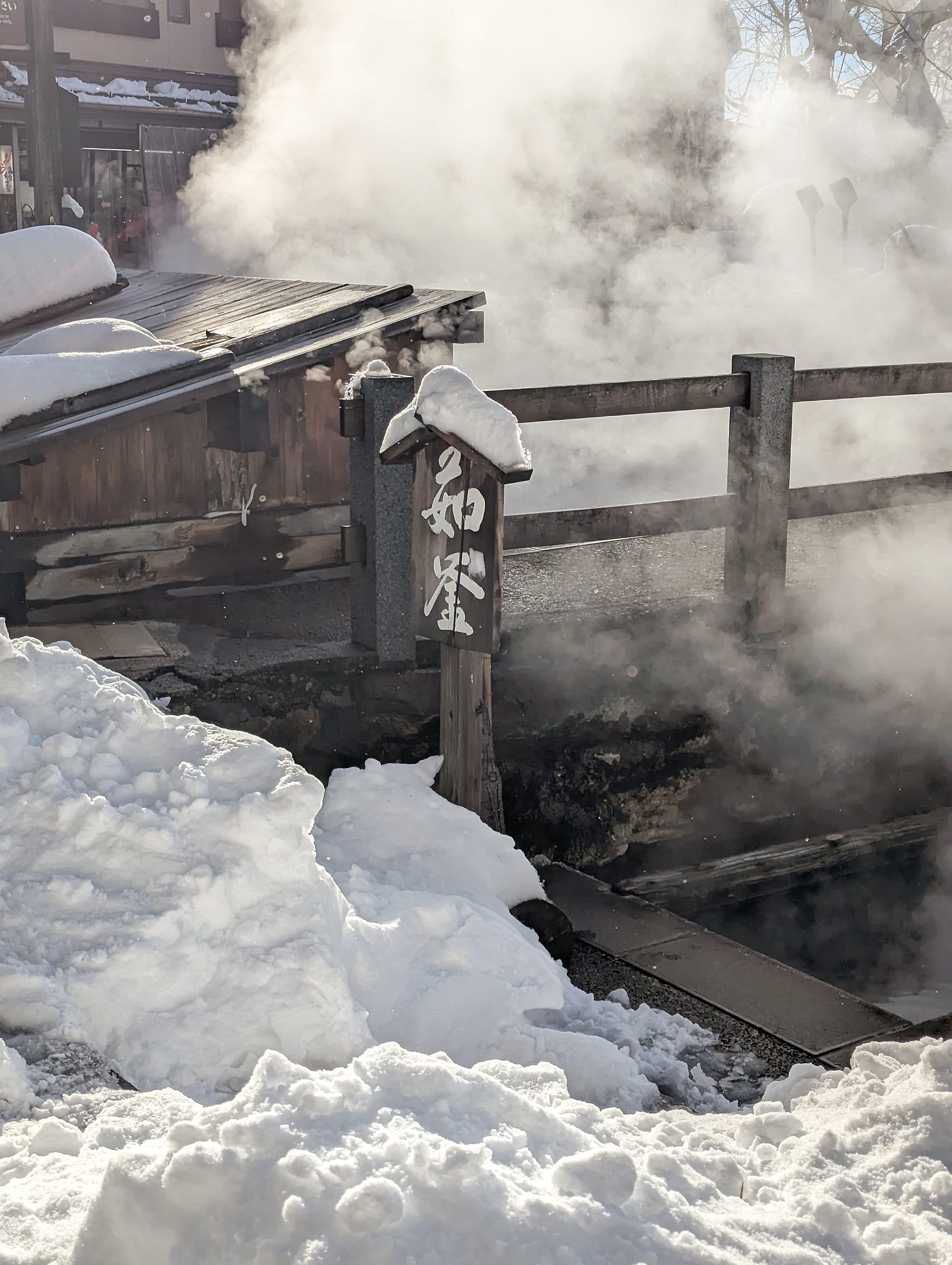
There is an outdoor bath at one of the soto-yu where you can see the mountains. In winter, snow sits on the wooden fence and steam rises so thick it obscures the view for seconds at a time. Then the wind shifts and the mountains reappear, white and sharp against the sky. You sit in water that comes from deep beneath those mountains, and for a moment the distance between you and the landscape disappears, physically rather than metaphorically. The same mineral water that carved the valley is now touching your skin. You are in the geology.
Rieko grew up with this. Not as ordinary life, but as something her family treasured. Her father worked long hours, and the rhythm of daily life left little room for stillness. But from time to time, the family would travel to an onsen town. A hot spring trip. Rieko remembers those visits with a warmth unrelated to temperature.
The awareness that comes from an onsen experience is quiet and specific. You notice the temperature of the air on your wet shoulders when you step out. You notice the weight of the wooden bucket as you pour cold water over your head. You notice the sound of water moving when someone else enters the bath. Small, physical, present. The opposite of the awareness that comes from thinking about yourself.
Western wellness has a version of this. Float tanks, sound baths, breathwork classes. Each one removes a sense or adds a stimulus to push you toward presence. The onsen does less, it just puts you in hot water with nothing between you and the world, and the simplicity is the point.
We do not think of vulnerability as something to practise. We think of it as something to survive. But the onsen makes a case for voluntary vulnerability as a form of attention. With nothing to protect, you stop watching for threats, and begin noticing instead. The stranger across from you has closed his eyes and looks, for the first time today, like he is not carrying anything at all.
The bathwater cools eventually, you step out and dry off and dress, and the layers return, but something stays different for a while. A looseness in the chest, a wider peripheral vision, a willingness to let the next thing happen without already planning for the thing after that. Walking back through the town afterwards, steam still rising from the drains, your skin flushed and cooling in the night air, you understand why people have been doing this for centuries.
Words & photos
Tom Vining