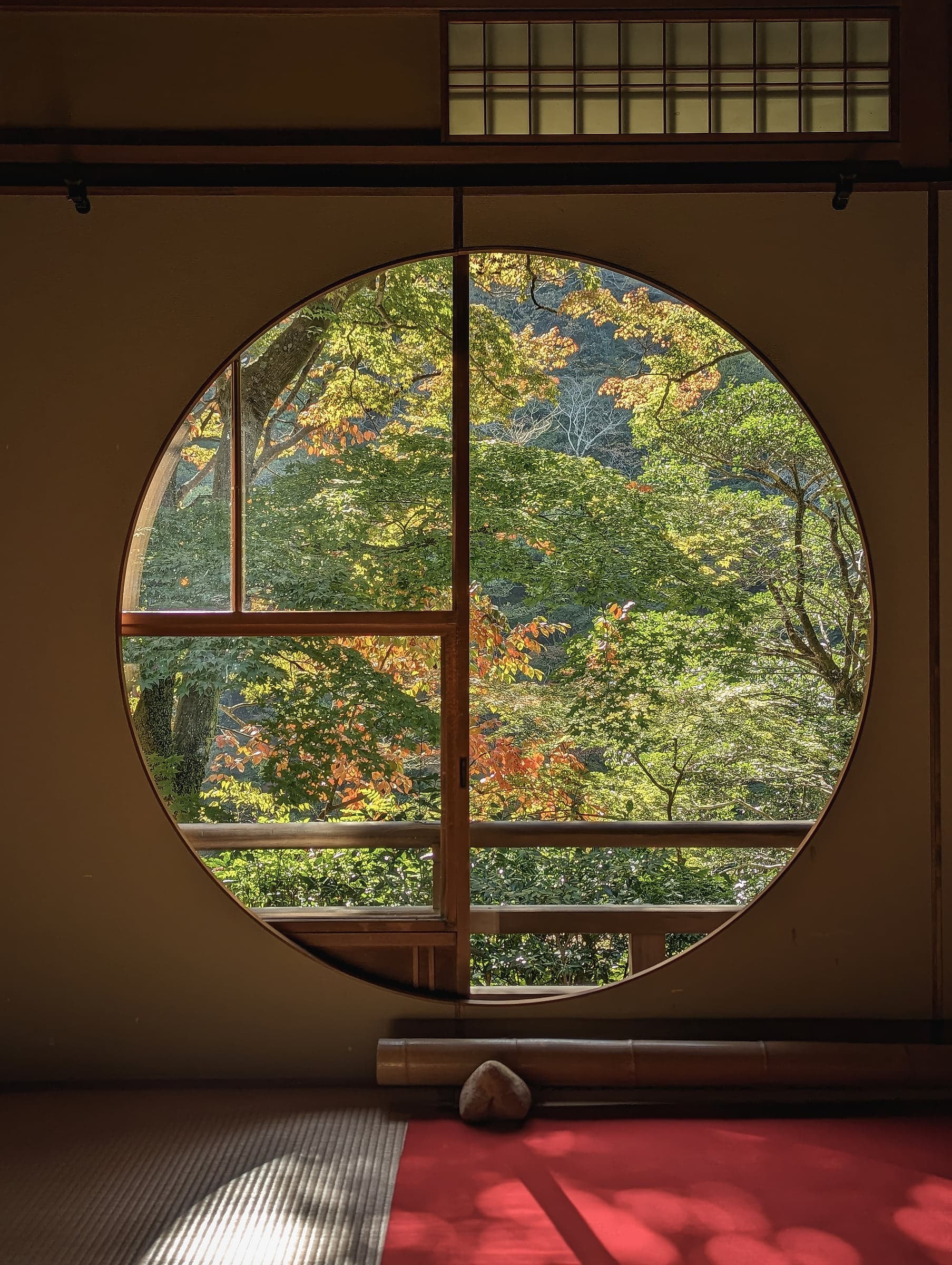
We bought it from a small shop in Japan. The owner was a craftsman himself, responsible for the final polishing stage of every comb that left the workshop. Before wrapping ours, he brought out a comb his ancestor had made during the Edo period and used for years. The wood had darkened to a deep amber, the teeth still perfectly intact, the whole object radiating a quiet authority that only comes from centuries of use. He held it like you would hold a family photograph. Then he slid ours into its cloth pouch and, before handing it over, talked us through how to care for it. He took his time. Store it in the pouch when not in use. Never leave it in a wet bathroom. Oil it with tsubaki every few months, working the oil into the teeth with your fingers. He spoke the way someone speaks about a living thing, with real attention to what it needs. The comb will last a lifetime, he said. Longer, if you treat it well.
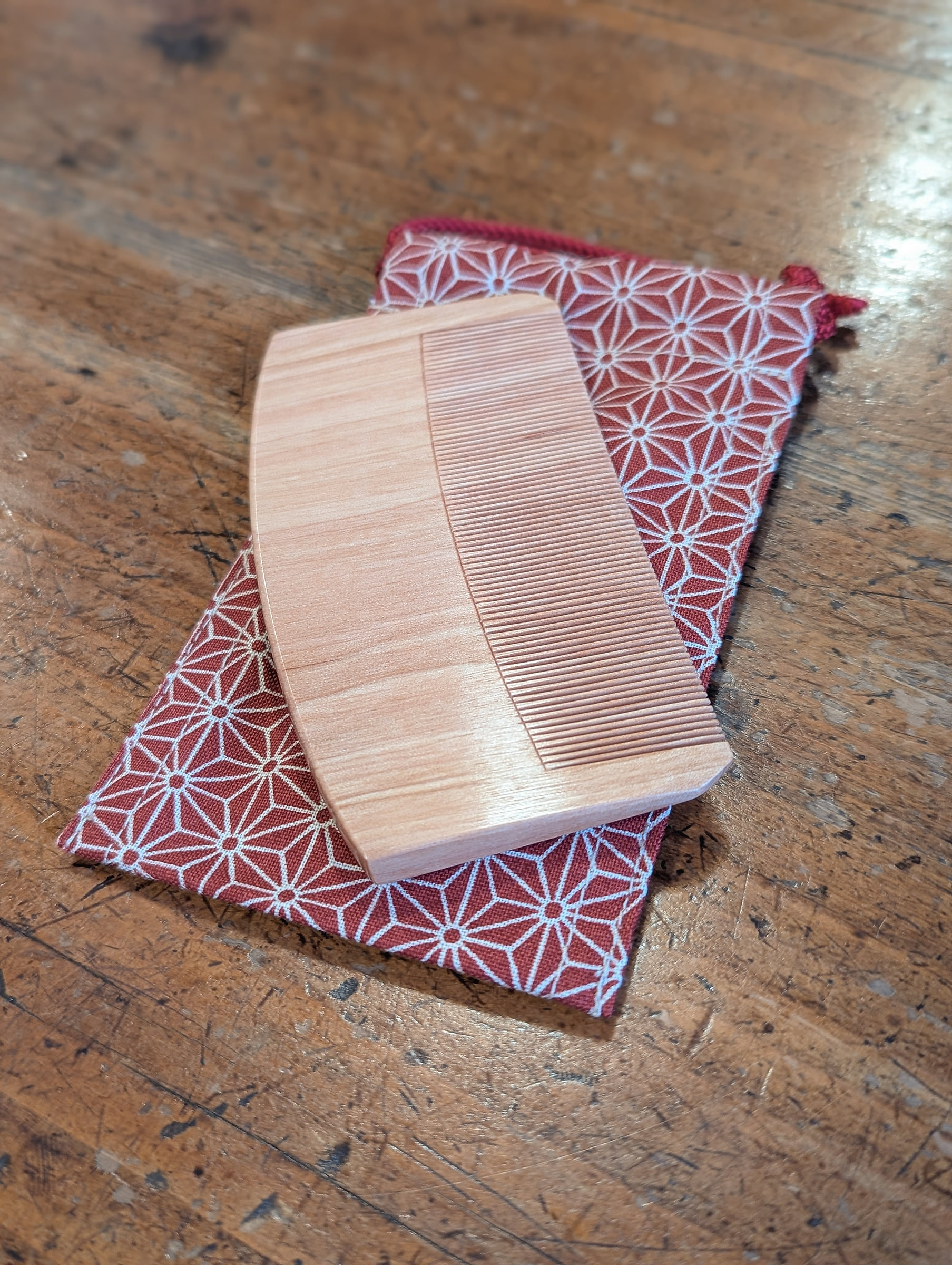
On the train back to our hotel, I slid it from the pouch again. Pale, dense wood, fine teeth cut so close together they looked like the lines on a ruler. The body curved gently, shaped to sit in the palm. Through the window, the countryside moved past, but I kept turning the comb in my hands, running a thumb along the teeth, feeling where each one had been polished smooth.
This is an oroku-gushi, a traditional fine-toothed comb from Yabuhara in the Kiso Valley, Nagano Prefecture. The craft is roughly three hundred years old, rooted in the Edo period, and named after a girl called Oroku. The story goes that Oroku suffered from terrible headaches. She visited Gokoku Daigongen Shrine to pray for relief and received a message: comb your hair every day with a comb made from the minebari tree. She did, and the headaches stopped. The combs have carried her name ever since.
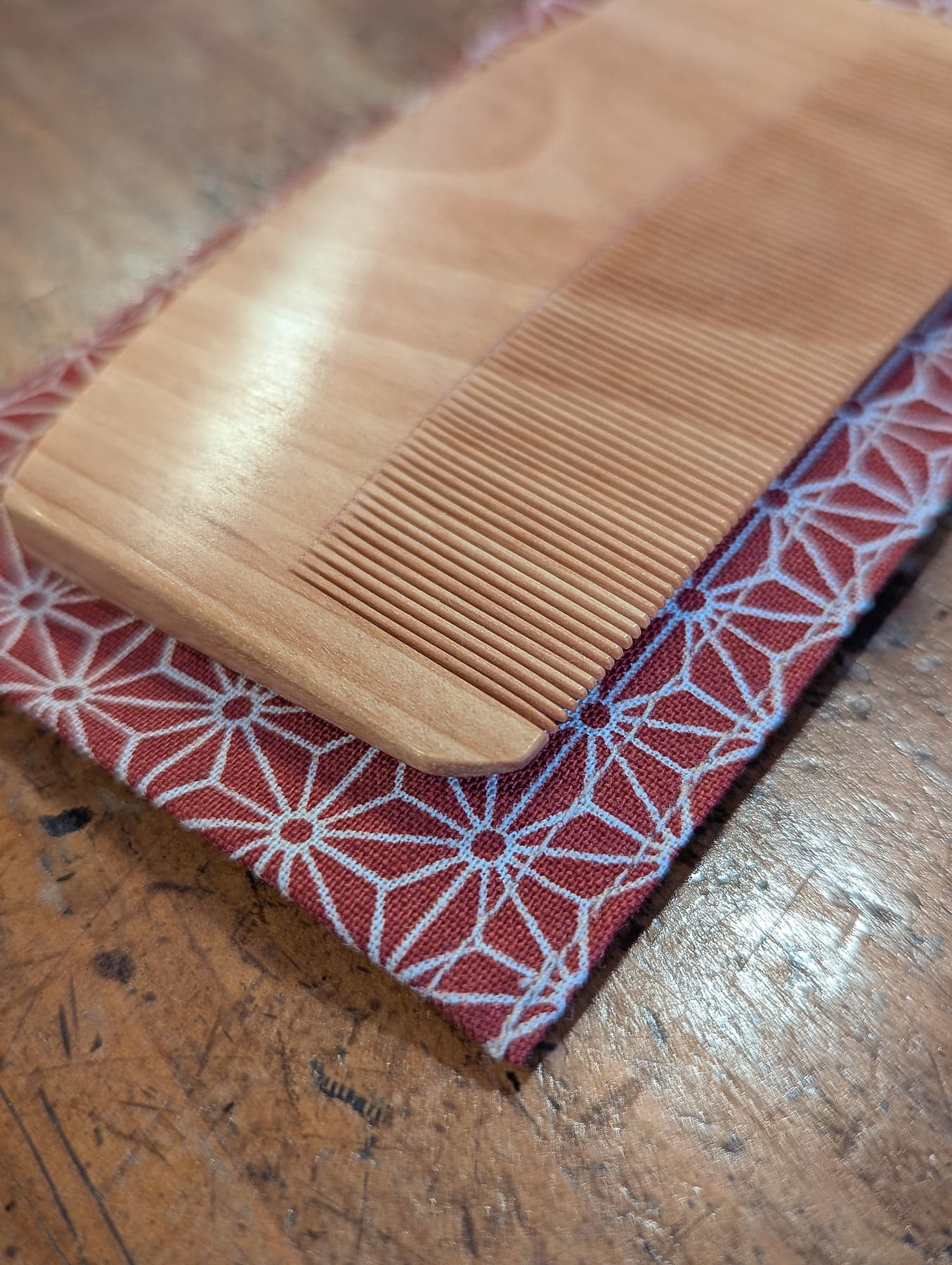
Minebari (Onoore Kanba) is an extraordinary wood. Its Japanese name translates roughly as "the tree that breaks axes," which tells you everything about its density. It sinks in water. It has a natural bitterness and antibacterial properties that the old craft families believe contribute to the comb’s reputation for healing. The wood is dried for thirteen years before a craftsman touches it. Thirteen years of waiting, just for the raw material to be ready. After that, the making begins.
A standard oroku-gushi is about ten centimetres wide, with seventy to a hundred teeth packed into that small space. Master-level combs push further: over a hundred and forty teeth in just eight centimetres, each spaced at intervals of roughly 0.6 millimetres. The teeth are cut one by one using more than twenty specialised tools, then hand-finished and polished until every edge is smooth enough to pass through hair without catching a single strand. The density of the teeth eliminates static and distributes natural oils evenly. After a few weeks of use, your hair changes. It becomes smoother, shinier. The comb is doing something a plastic comb cannot.
The number of craftsmen who can make oroku-gushi is declining. Plastic combs arrived in the late 1940s and the industry contracted sharply. Some makers left the craft entirely, returning only decades later. The Kiso Village Orokugushi Comb Association now runs training programmes in local schools, trying to develop successors. It is a familiar story in Japanese craft: a tradition sustained by fewer hands each generation, each pair of hands carrying more weight.
The comb came in a drawstring pouch of cotton fabric printed with asanoha, the hemp leaf pattern that appears across Japanese craft and textiles. Asanoha is one of the oldest geometric patterns in Japan, associated with growth and good health. For daily use, the pouch is enough. But for long-term storage, the shop owner told us, place the comb in a container with a soft cloth and a little tsubaki oil. The wood stays nourished, the teeth stay smooth, and the comb keeps aging the way it should.
“A comb is the most ordinary object in the world, which is precisely what makes a good one so startling.”
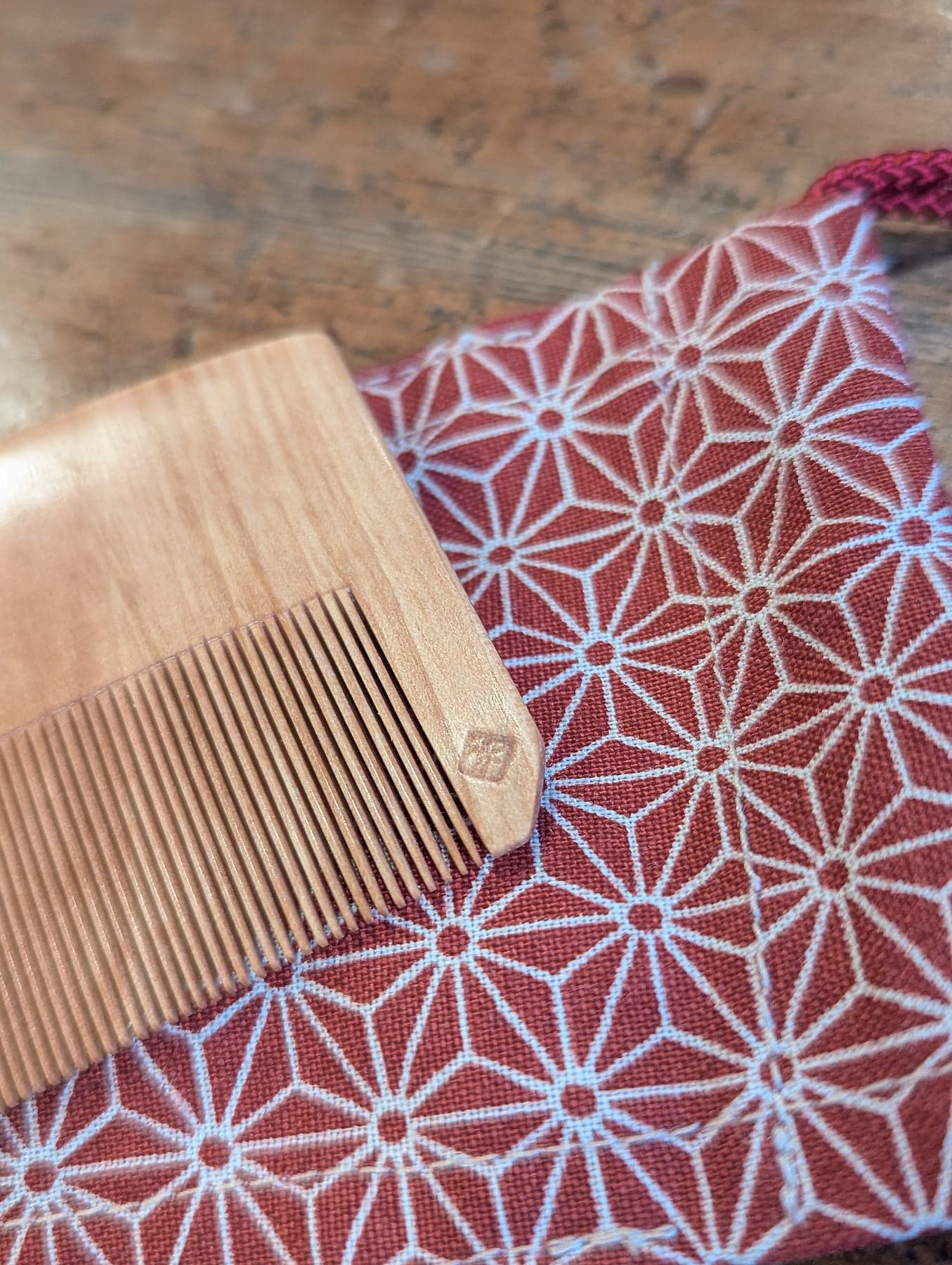
Minebari changes over time. The natural oils from your hair and scalp absorb into the grain, darkening it gradually from pale straw to a deep, warm amber. A comb that has been used for twenty years looks completely different from a new one. It carries a record of use that no other material can replicate. Plastic stays the same forever, but minebari becomes yours.
There is an ancient Japanese belief that objects used with care accumulate a kind of spirit. Not just mountains and rivers, but bowls, knives, brooms, and combs. An object made with enough skill, from the right material, used with enough attention, becomes more than what it was when it left the workshop.
Rieko uses it most mornings. Sure enough, her hair looks shinier and healthier than it ever did. I’m envious. Next time we’re in Nagano, I’m buying one for myself.
Words & photos
Tom Vining