The alarm went off at four-thirty. Not a hotel alarm, not a phone. A wooden clapper struck three times somewhere in the corridor, followed by the shuffle of feet on tatami. We were in a shukubo, a temple lodging on Mount Koya, and morning prayers started at five regardless of whether anyone felt ready for them.
The room was cold. The futon was warm. Leaving one for the other required a kind of commitment that felt unreasonable at that hour. But we had come here for this. You don’t stay on a mountain at 800 metres above the Kii Peninsula, in a temple founded in 816 by the monk Kukai, for the sleep.
The prayer hall was lit by candles and the low glow of a few overhead lamps turned down to almost nothing. The monks were already seated. We took our places at the back, on thin cushions, knees on cold wood. The chanting began without introduction. Low, resonant, rhythmic. Sanskrit syllables that have been recited in this hall for centuries, the sound rising into the wooden ceiling and hanging there.
You don’t understand the words, and that isn’t the point. The chanting works more like a frequency than a message. You sit in it the way you sit in weather. After ten minutes, the cold in your knees stopped registering. After twenty, I wasn’t thinking about anything at all. Not in a meditative way, not through effort. The sound simply filled the space where thought normally is.
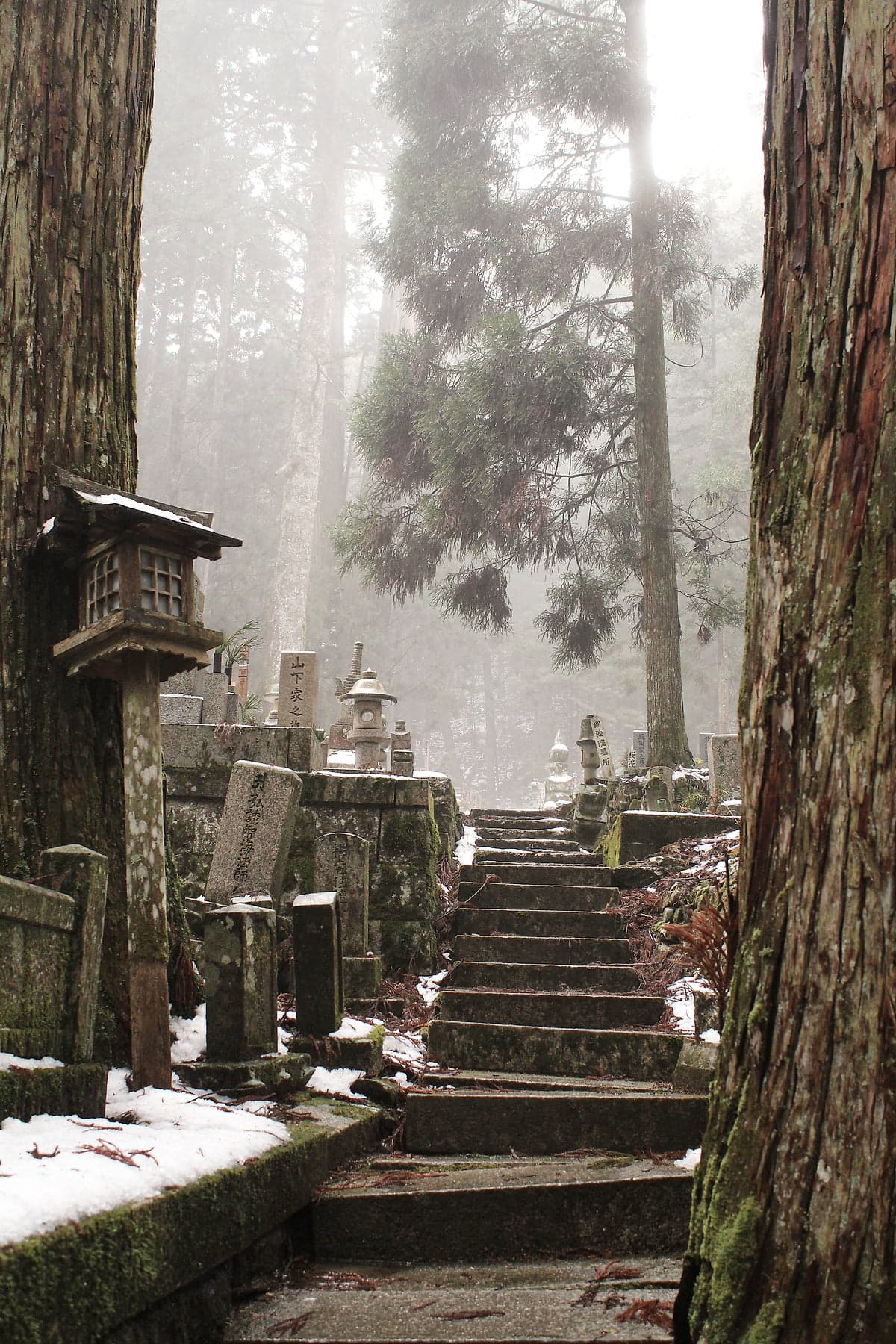
Koya-san is a town of 117 temples on a plateau in the mountains of Wakayama Prefecture. Kukai, the founder of Shingon Buddhism, established it as a monastic centre in the early ninth century. Twelve hundred years later, the mountain still operates on his terms. Monks walk between temples in wooden geta. Incense smoke drifts from every doorway. The food is shojin ryori, the vegetarian cuisine of the monasteries, served on lacquer trays in the shared dining hall.
We ate dinner cross-legged on the tatami the night before. Sesame tofu, pickled daikon, simmered vegetables in a light dashi, rice, miso. Small dishes, precisely arranged, protein mainly from soya, and no alcohol. The meal was not restrictive so much as focusing: it removed options, and what remained had your full attention.
After our breakfast, we walked to Okunoin.
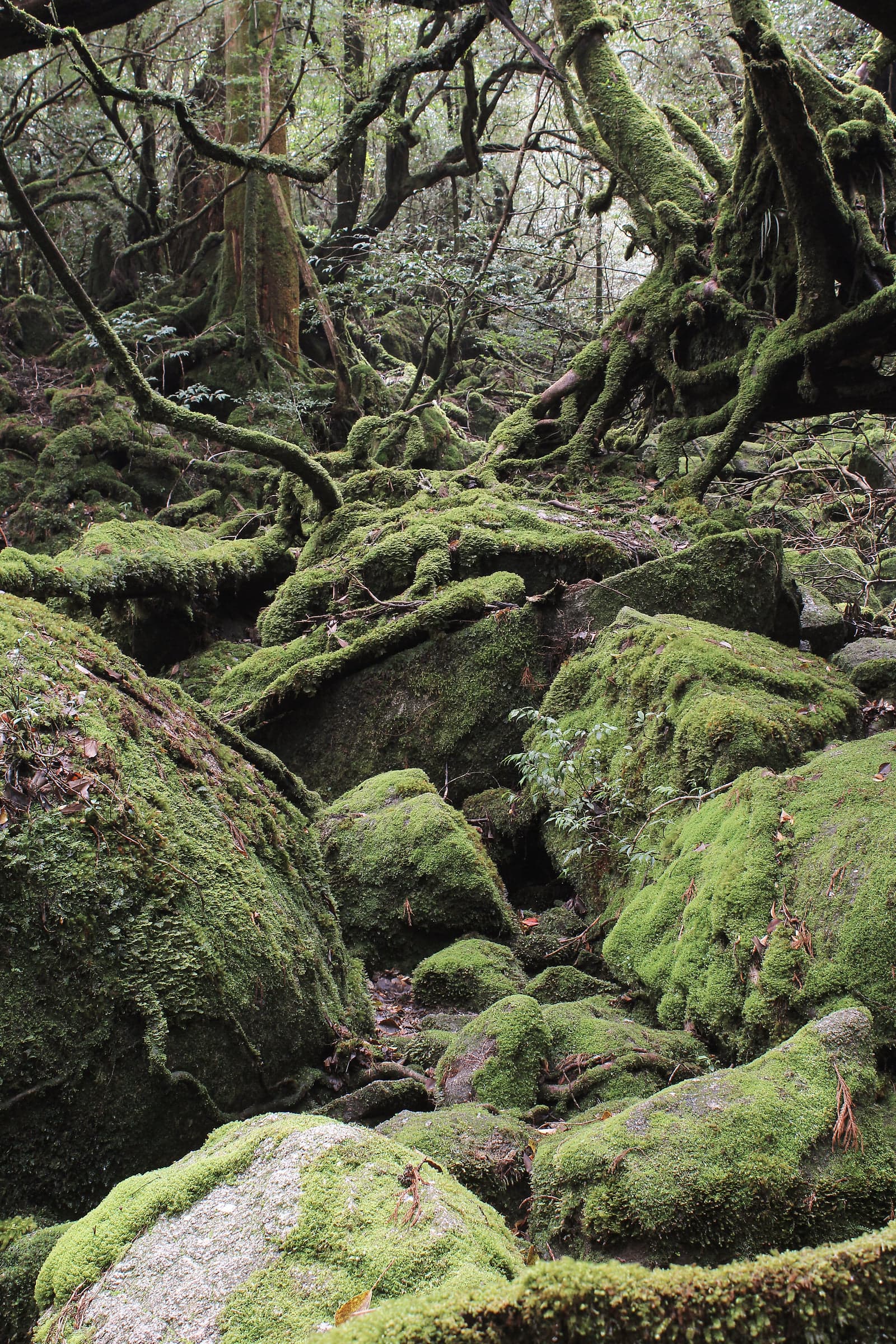
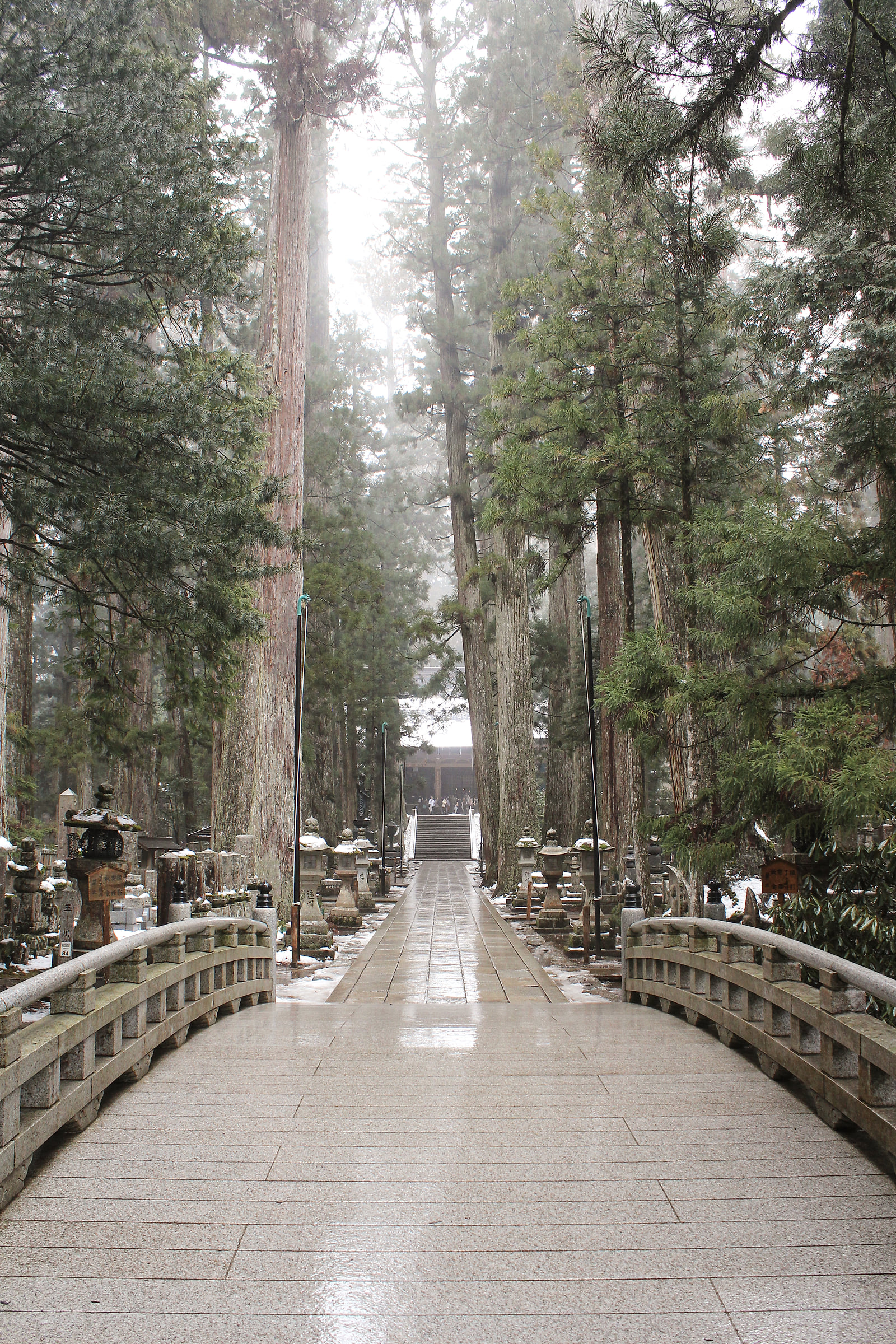
The path begins at Ichinohashi bridge and runs for two kilometres through the largest cemetery in Japan. Over 200,000 graves line the route, some of them a thousand years old, all of them set among Japanese cedars so tall the canopy closes above the path and filters the light to a grey-green haze. Moss covers everything. The stone markers, the lanterns, the steps, the carved Buddha figures wearing hand-knitted red caps and bibs placed there by the living.
“You walk through Okunoin and your breathing slows without you noticing. The mountain doesn’t ask anything of you. It just waits, the way it has for 1,200 years.”
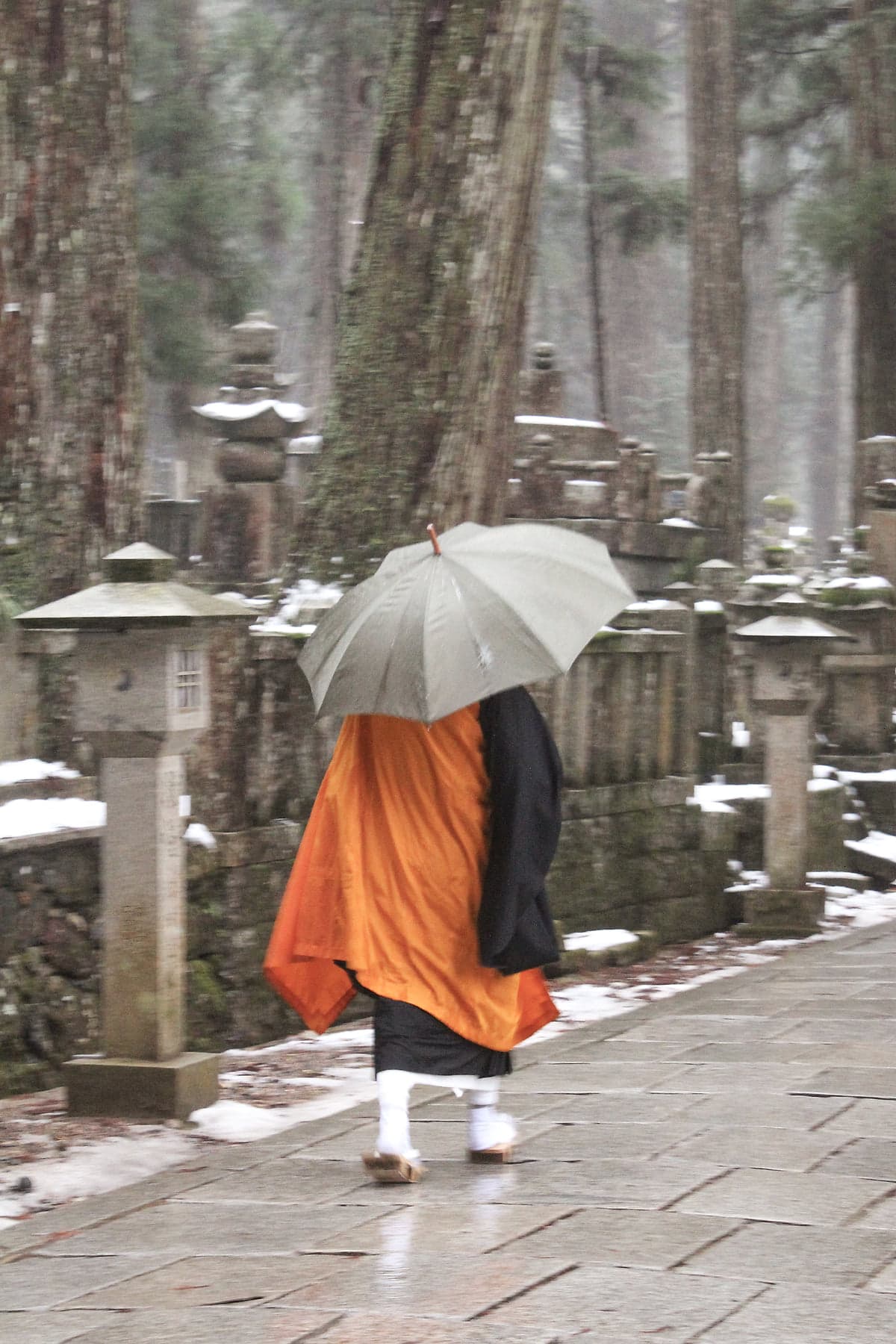
The silence was not empty but occupied. Birdsong, water dripping from branches, the distant sound of a wooden bell from somewhere deeper in the cemetery. Our footsteps on the stone path sounded like the loudest thing on the mountain. I slowed down without meaning to, and so does everyone.
Halfway along the path, we passed a monk walking in the opposite direction. Orange kesa over black robes, an umbrella held against the fine rain that had started falling. He didn’t look at us. He didn’t need to. His pace was deliberate, unhurried, the walk of someone for whom this path is not a destination but a daily practice. He moved along the straight path as though he and it were the same thing.
There are graves here for samurai, for emperors, for corporate founders. Panasonic, Nissan, and Kirin all have memorials along the path. There is no hierarchy to the arrangement. A feudal lord’s monument stands beside a family marker no larger than a shoebox. The cedars don’t discriminate, and the moss covers everything equally.
At the end of the path, beyond a small bridge that marks the boundary of the innermost sanctuary, is the Torodo, the Hall of Lanterns. Over 10,000 lanterns burn inside, two of which are said to have been lit for over 900 years. Behind the hall is the mausoleum of Kukai himself. In Shingon belief, Kukai is not dead. He entered eternal meditation in 835, and the monks still bring him meals twice a day. Every morning, every evening, for 1,200 years.
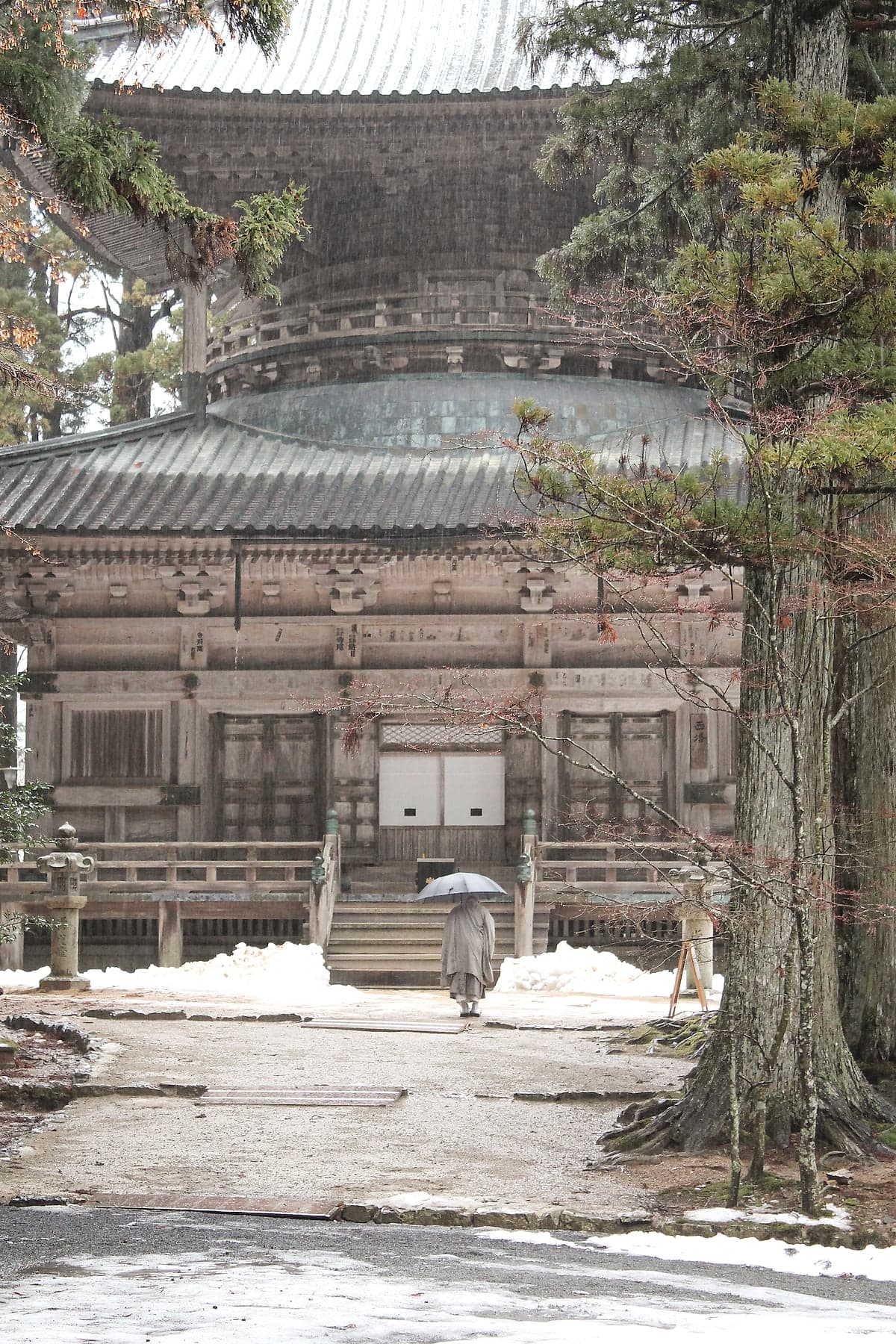
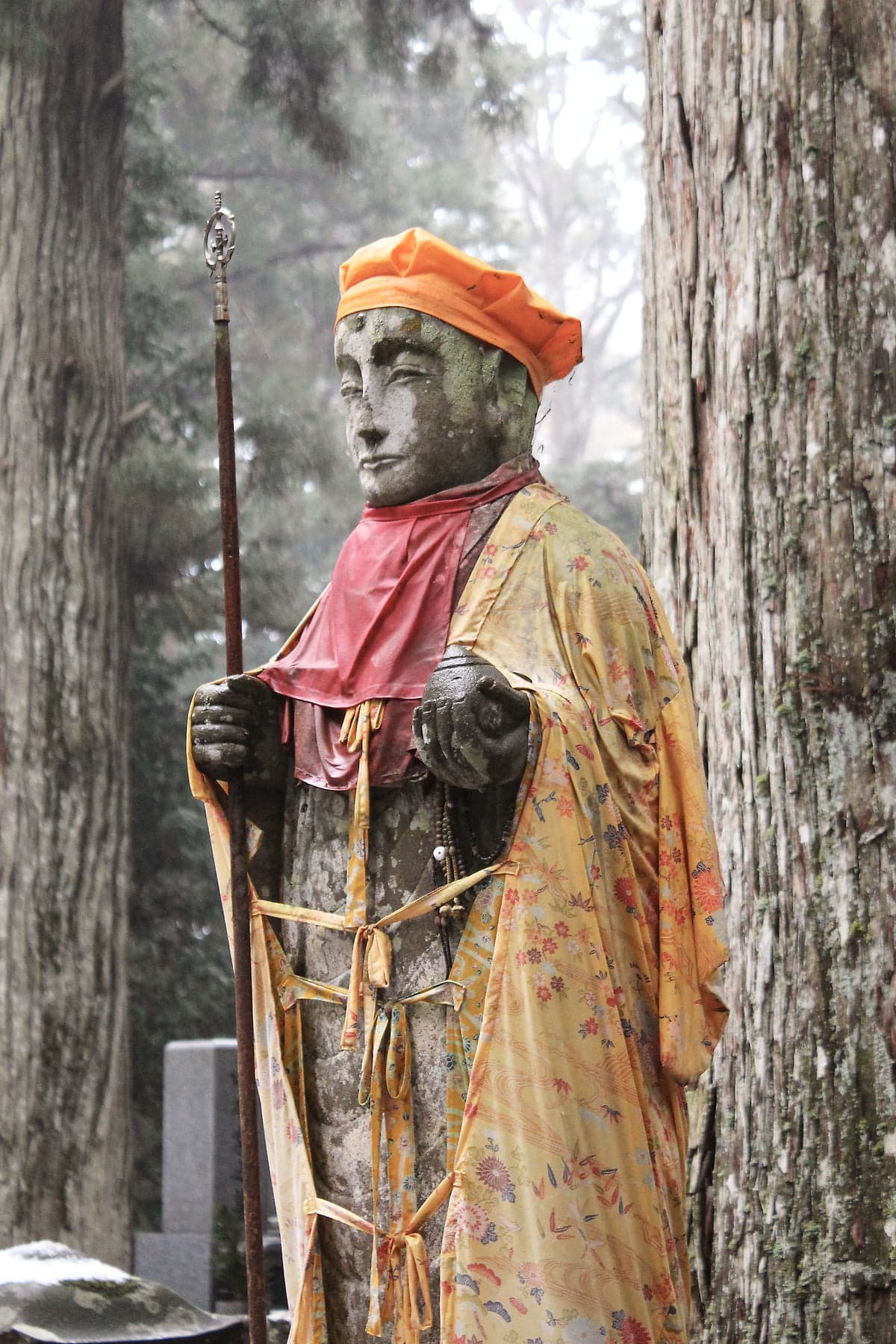
Whether you accept that literally does not matter. What matters is that people have been walking this path, tending these graves, chanting these sutras, and carrying those meals without interruption for longer than most nations have existed. The awareness on this mountain is a practice, so deeply embedded in the place that you absorb it by proximity.
We caught the cable car back down in the early afternoon. The funicular dropped steeply through bare winter forest, the trees close on both sides, snow on the tracks. At the bottom station we changed to a local train. The driver sat upright in his cab, uniformed, focused, calling out each stop. The Kii Peninsula spread out below as the train wound down through the valleys.
Neither of us spoke much. A kind of quiet settles in after sustained attention, not tired and not reflective exactly, more like the pause after a long exhale. The mountain was behind us. Already settling into the kind of memory that changes shape slowly over years. Outside, winter light arrived late in the mountains, grey and soft and undemanding. We had a long way back to Osaka. There was no reason to hurry.
Words & photos
Tom Vining