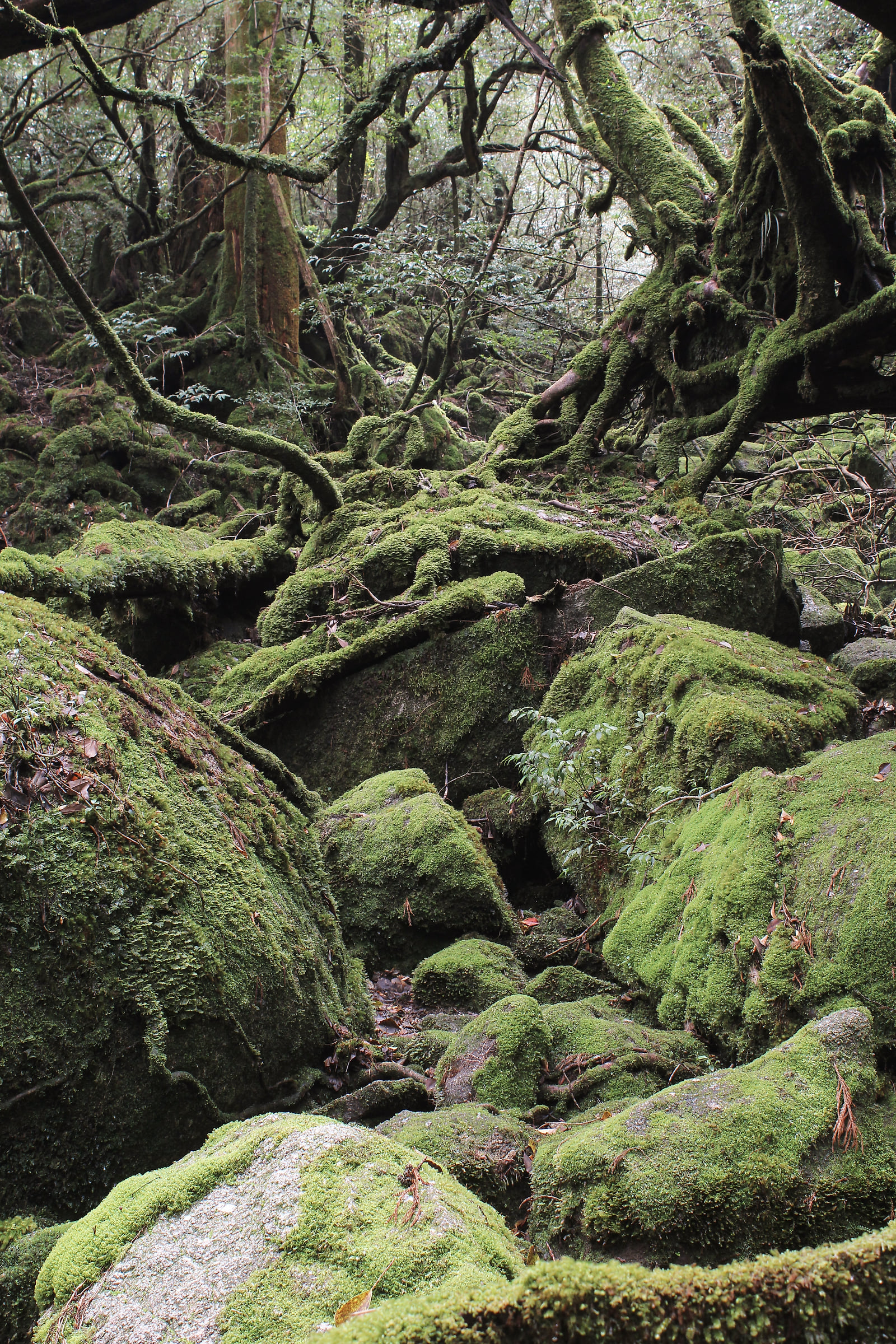
The forest floor was breathing. Not metaphorically. The moss covering every surface, every rock and root and fallen trunk, was so thick and so saturated with rain that the whole landscape seemed to rise and fall with a rhythm of its own. Water dripped from branches overhead. Water ran between the boulders at our feet. Water hung in the air as mist, diffusing the light until there were no shadows at all, just a soft green glow that came from everywhere and nowhere.
We had been walking for two hours along the Shiratani Unsuikyo trail. The path, such as it was, moved between granite boulders wrapped in moss so deep it looked like upholstery. Roots crossed the trail in thick tangles, some of them exposed and polished smooth by decades of hikers, others hidden beneath the moss layer, waiting to catch a boot. Rieko walked ahead. She had not spoken in some time. There was nothing to say that the forest was not already saying.
Yakushima sits 60 kilometres off the southern tip of Kyushu. A small, nearly round island, roughly 500 square kilometres, most of it mountainous and almost all of it covered in forest. The interior peaks reach nearly 2,000 metres, high enough to create their own weather. Yakushima receives between four and ten metres of rainfall per year, depending on altitude. The locals say it rains 35 days a month. They are not entirely joking.
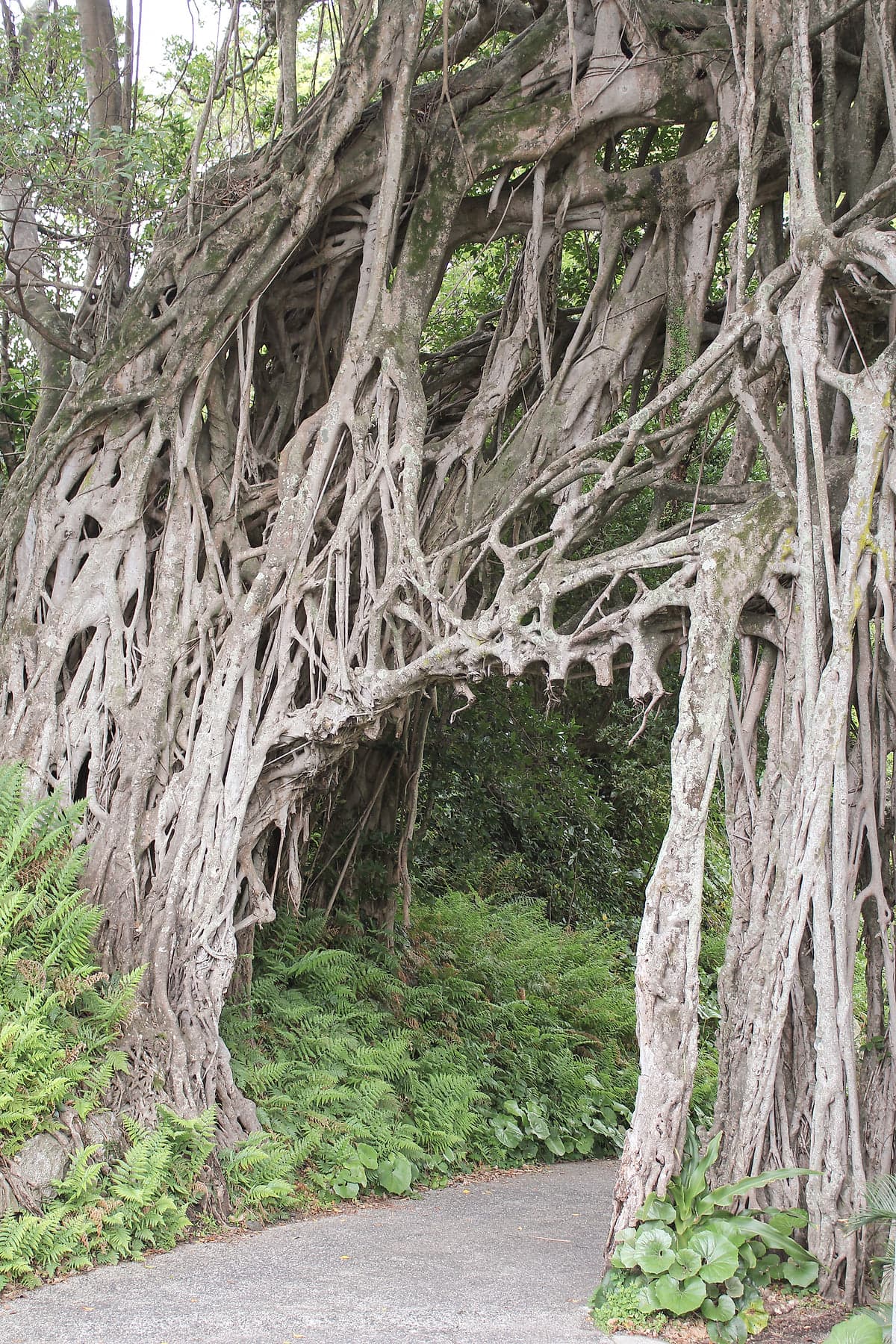
This rain is why the cedars grew here. And kept growing. The oldest of them, Jomon Sugi, is estimated to be between 2,170 and 7,200 years old. The range is that wide because the interior of the trunk has rotted away, making precise dating impossible. It does not matter. Whether the tree was a sapling when the pyramids were being built or when the first Jomon people were firing clay pots, the scale is the same. It was here before recorded history, and it is still here, and it does not care that you came to look at it.
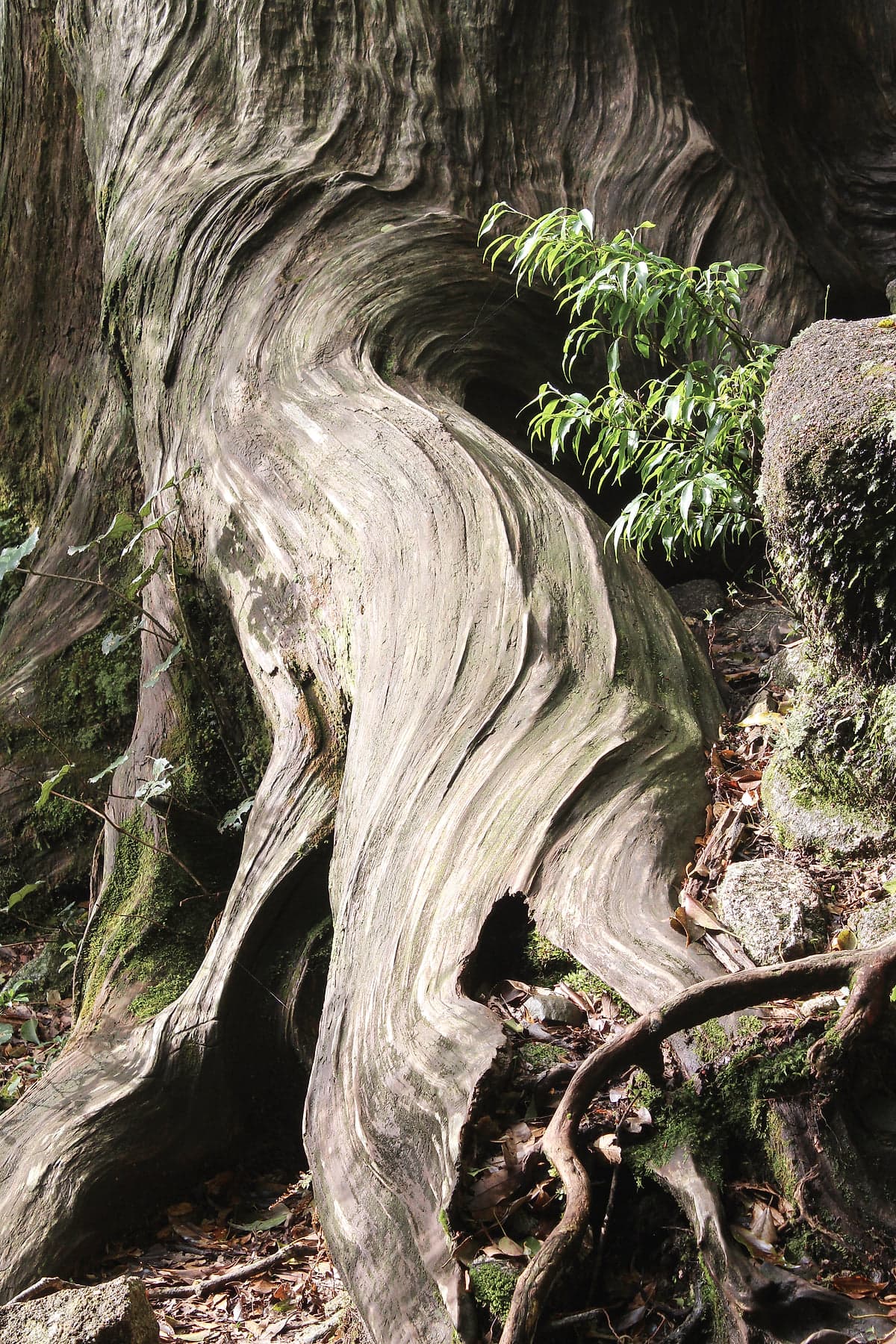
The yakusugi (the name given to any Yakushima cedar over a thousand years old) do not look like other trees. Their trunks twist and bulge and fold in on themselves, the grain spiralling in patterns that suggest geological time more than biological growth. Bark gives way to exposed wood, the surface worn smooth and silver-grey, shaped by centuries of wind and rain into forms that look sculpted. Younger trees grow from the trunks of older ones. Moss and ferns sprout from every crevice. A single tree becomes an ecosystem, hosting dozens of other species in its canopy and on its bark, each one depending on the structure the cedar provides.
This is what Hayao Miyazaki saw.
The Shiratani Unsuikyo ravine is the forest that inspired the landscapes of Princess Mononoke. Miyazaki visited in the 1990s, sketching the moss-covered boulders and the tangled canopy, and the connection is immediate. Walking through it feels like walking into a frame of the film. The same green saturation. The same sense of a forest that is not a backdrop but a character. The same feeling that you are being watched, not by anything hostile, but by something very old that is simply aware of your presence.
In the ancient Japanese understanding, Yakushima’s cedars are not sacred because someone designated them. They are sacred because they are inhabited. Yaoyorozu no kami, the belief that spirit exists in all things, is not an abstract concept on this island, it is obvious. You stand in front of a tree that has been alive for three thousand years, its roots gripping granite, its branches holding an entire aerial garden of ferns and orchids, and the idea that it possesses spirit requires no argument at all.
“A web that lasts a day, strung between branches of a tree that has lasted millennia.”
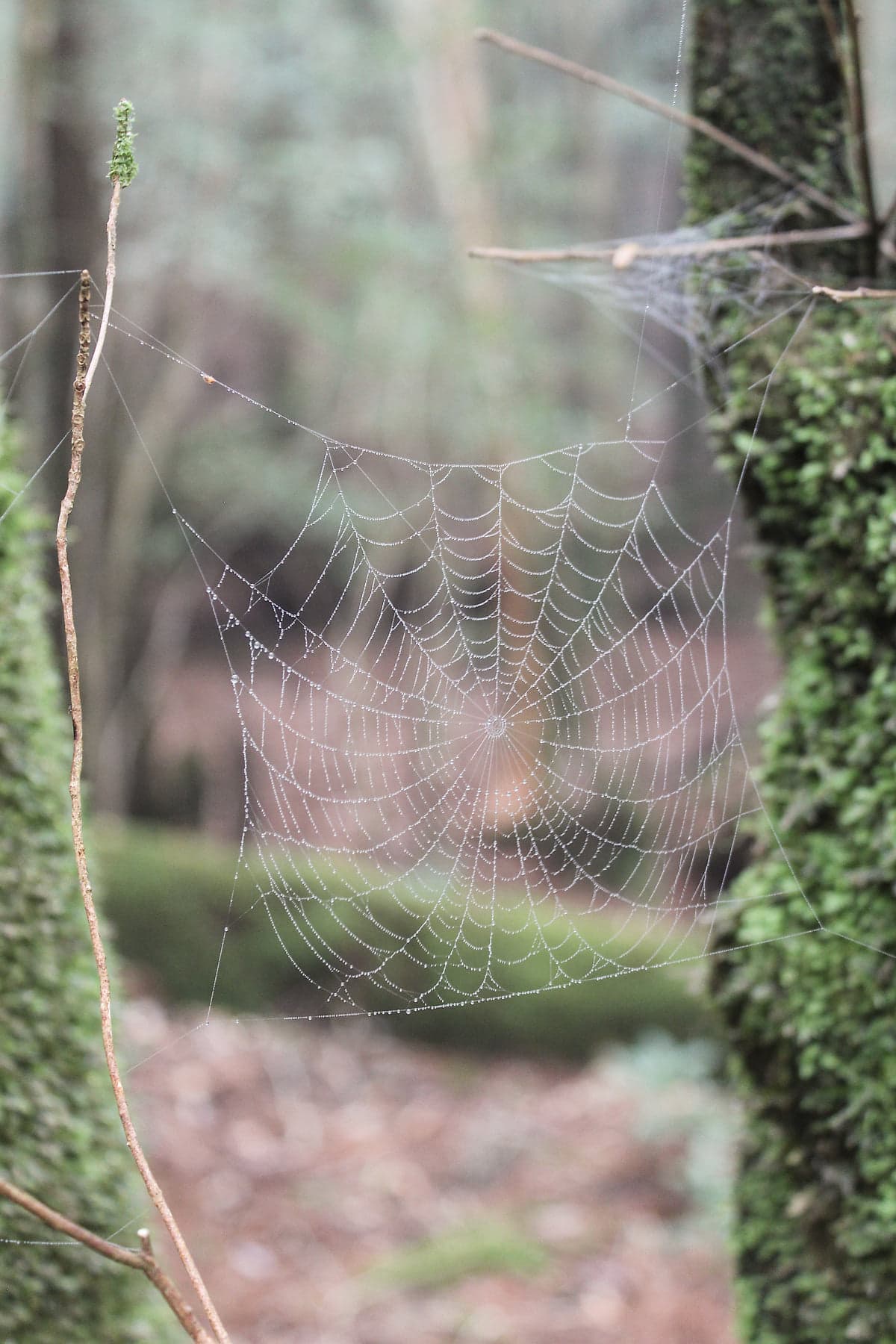
We reached a clearing where two boulders, each the size of a small car, leaned against one another with a gap between them just wide enough to pass through. The moss on their surfaces was deep, a dozen shades of green depending on exposure and moisture. A spider had built a web between two branches at the entrance, the silk beaded with water droplets so fine they caught the diffused light like a string of tiny lenses. It must have taken hours to build. The rain would destroy it by evening.
That contrast stayed with me. A web that lasts a day, strung between branches of a tree that has lasted millennia. Both of them doing exactly the same thing: being alive, in this place, for as long as their nature allows. The spider does not know the tree is ancient. The tree does not know the spider is ephemeral. Only we assign meaning to the difference, measuring one lifespan against another. The forest makes no such distinction, and everything in it is simply present.
The trail climbed and the mist thickened. At higher elevations the cedars were larger but fewer, their trunks spaced further apart, each one occupying enough ground for a small building. The silence up there was not empty. Water moved constantly, over rock, through moss, down the channels cut into the granite over thousands of years. Birds called from somewhere above the canopy. The occasional crack of a branch falling. These sounds did not break the silence so much as give it texture.
We stopped at a viewpoint where a gap in the canopy opened onto a valley filled with cloud. The tops of the cedars below us rose through the mist like islands. She sat on a rock and pulled out her water bottle. I stood and watched the cloud move through the valley, slow and purposeful, filling one gap between the trees and then the next, the way water fills a vessel.
Time on Yakushima does not slow down exactly, it widens. You become aware of how many things are happening at the pace of centuries rather than minutes. The moss grows a millimetre a year, the cedar adds another ring, and the granite wears down under the rain so slowly that the process will continue long after the tree itself has fallen and returned to the soil that grew it.
We walked back down as the afternoon light softened. The trail was quieter now, most hikers already heading for the bus. At the trailhead, the sound of the road and the bus engine and a vending machine humming felt like re-entry from somewhere very far away. Our boots were soaked through. Time for the onsen.
Words & photos
Tom Vining