The shaden, the wooden shrine tower built by the village for this one night, stood in the snow like something from a different century. Fifteen metres of stacked timber, branches, and straw, topped with live pine trees, rising from a slope above the village of Nozawa Onsen. Around its base, men in brown uniforms lined up in rows. Their breath fogged in the January air. A Shinto priest in ceremonial robes walked across the snow, blessing the structure that would be destroyed within hours.
This is the Dosojin Matsuri, one of Japan's three great fire festivals, held every 15 January since the Edo period. The men of Nozawa Onsen build the shaden, dedicate it to the dosojin (the protective spirits of the village), and then fight over whether it burns. Defence falls to the men in their yakudoshi, the unlucky years: the 25-year-olds hold the base against the flames, while the 42-year-olds climb to the roof and sing to liven the night. Everyone else attacks. The whole village watches, drinks, and participates.
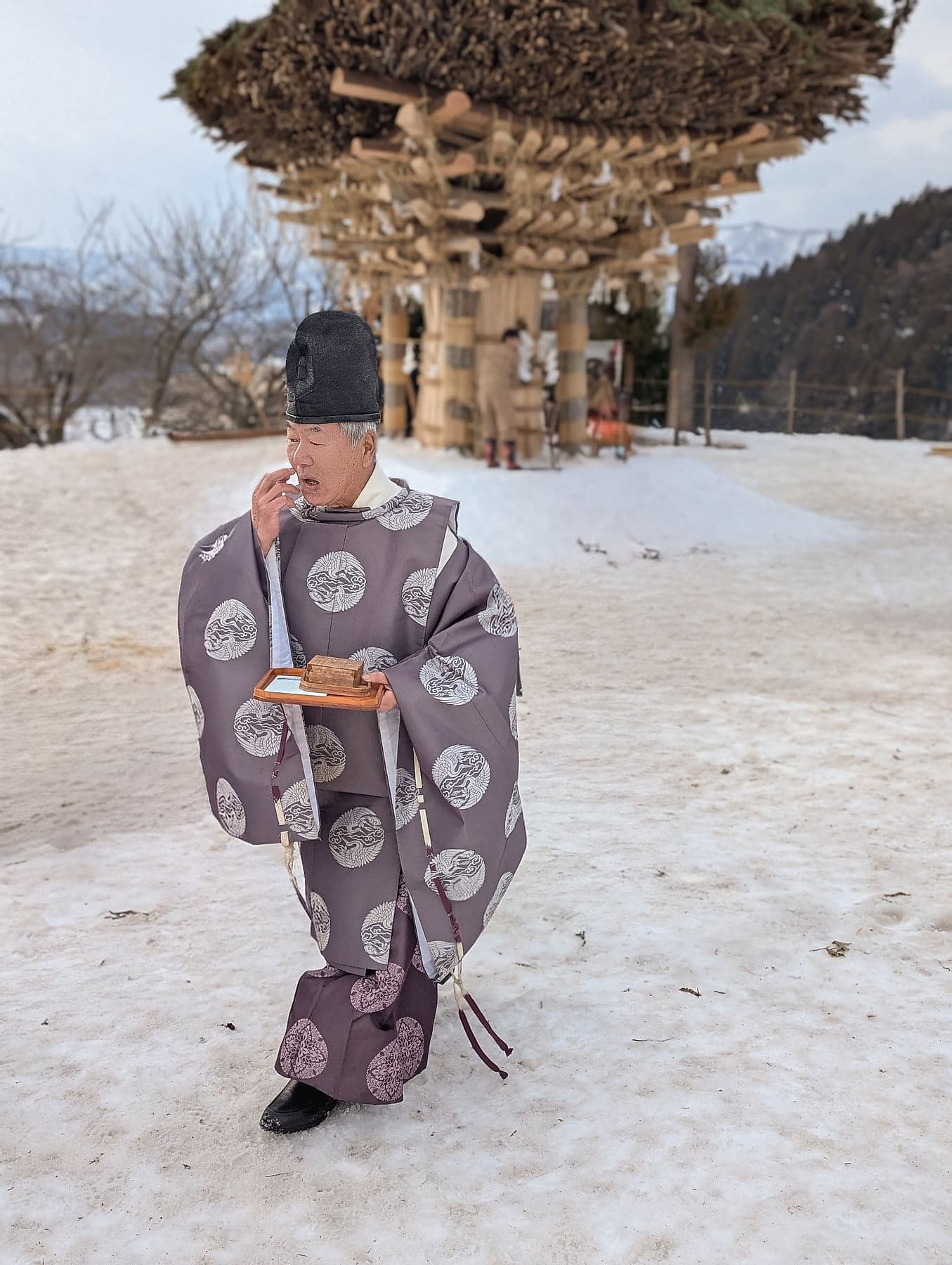
By late afternoon the shrine had been blessed, the group photographs taken, sake poured for the spirits and for the men who would defend them. The priest walked back across the snow alone, his formal robes dark against the white hillside. Behind him, the shaden waited. Straw-wrapped, timber-braced. A thing built to be beautiful and then to be burned.
Night fell fast. The temperature dropped with it, and the village filled from the edges. Families carried children on their shoulders. Old women stood in doorways with cups of amazake, the warm, sweet fermented-rice drink that Japanese villages have poured at winter festivals for centuries. At the base of the slope, fire stations had been prepared: massive bonfires fed with cedar branches, their heat pushing back the cold in shifting waves. Torches were distributed. Long bundles of straw bound tight, lit from the communal fires, carried uphill toward the shaden.
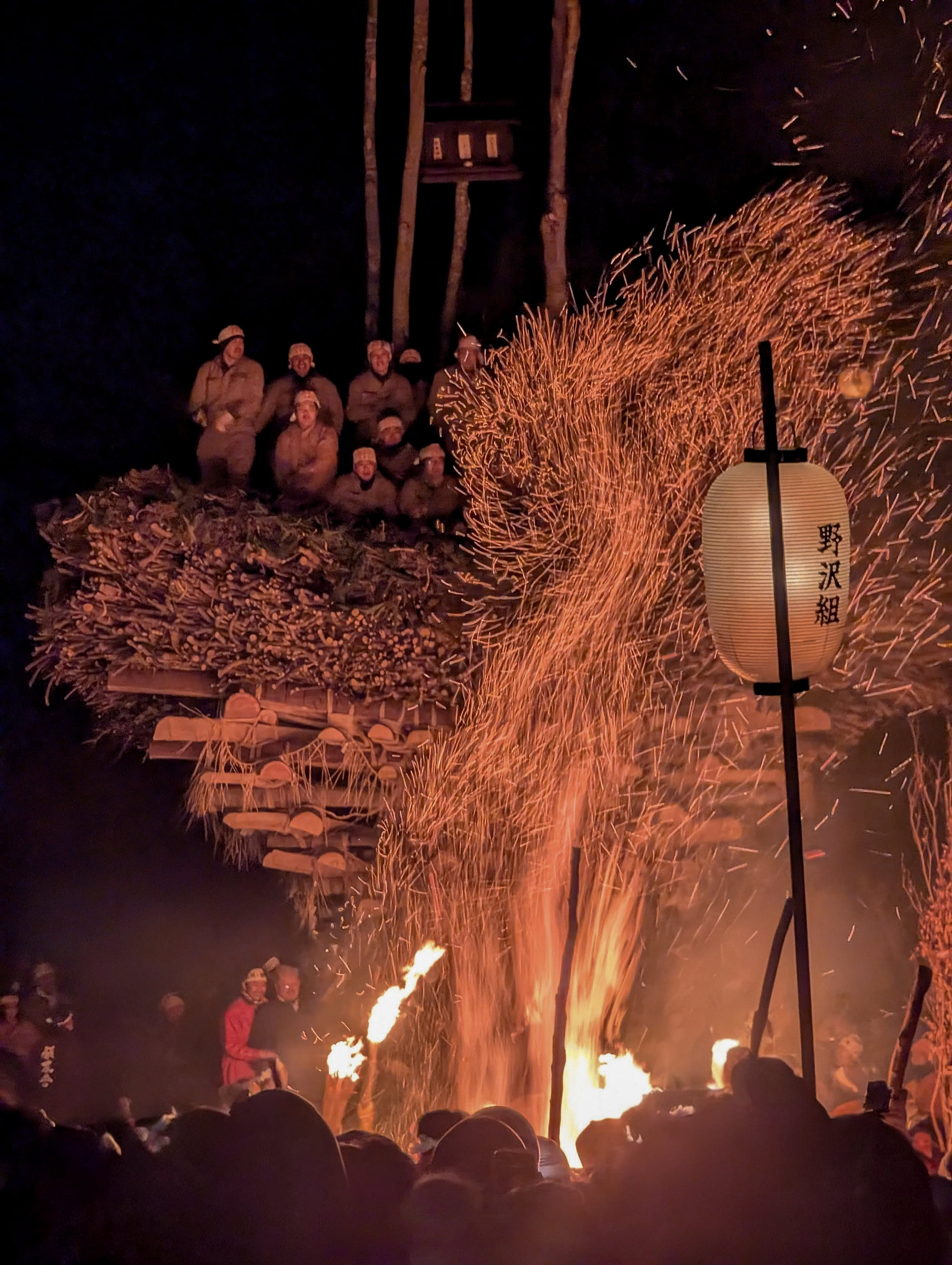
The attack began without signal. Men rushed towards the base of the shrine with burning torches, pressing fire against the straw and timber. From above, the defenders kicked the torches away, stamped out flames with their boots, hauled up burning bundles and threw them back. The crowd surged, sparks rose in spiralling columns, and the heat was immediate and total. You could feel it on your face from thirty metres away.
“You could feel the heat on your face from thirty metres away. On top of the shaden, the 42-year-olds sang as the fire climbed toward them through the logs.”
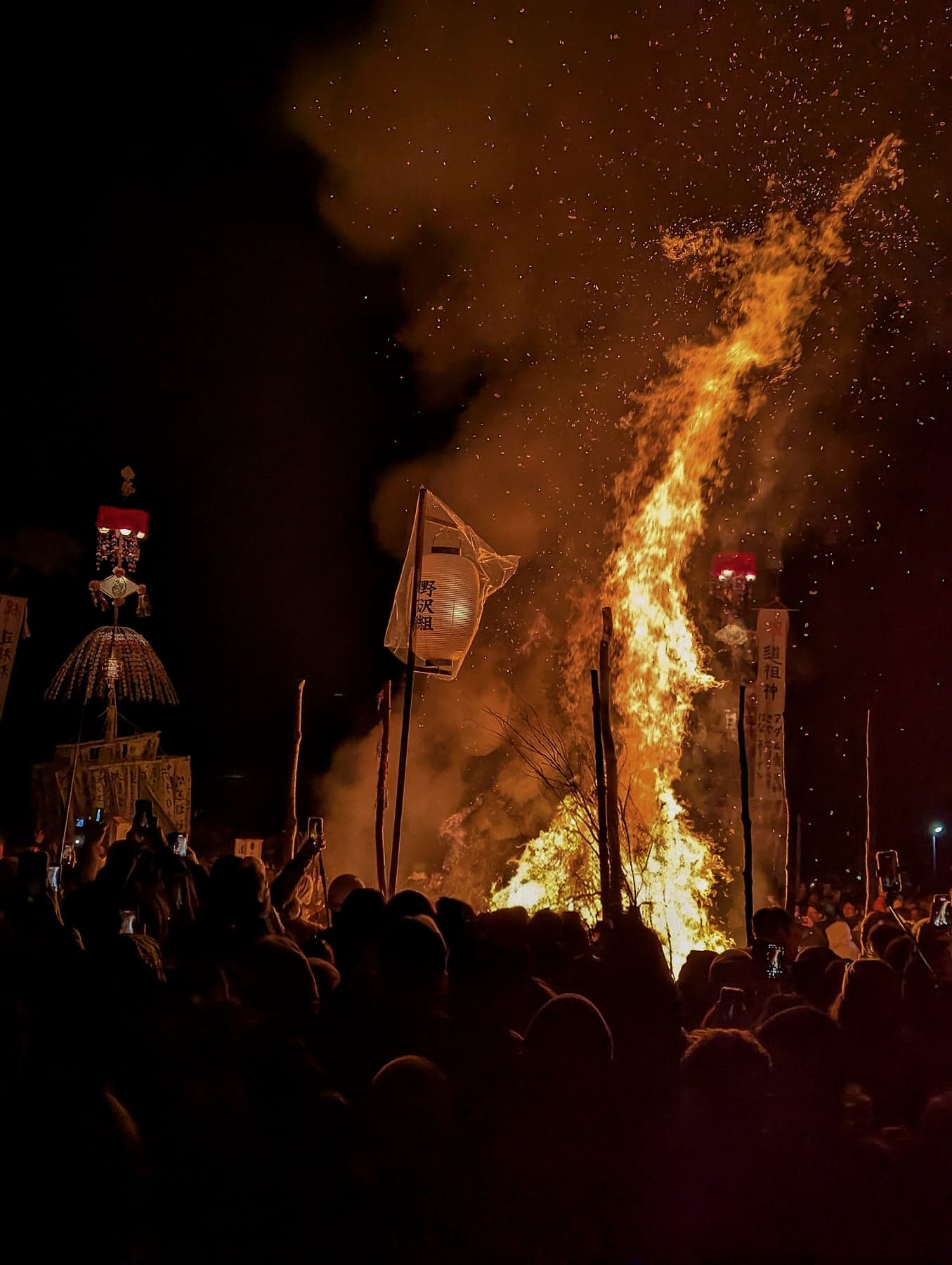
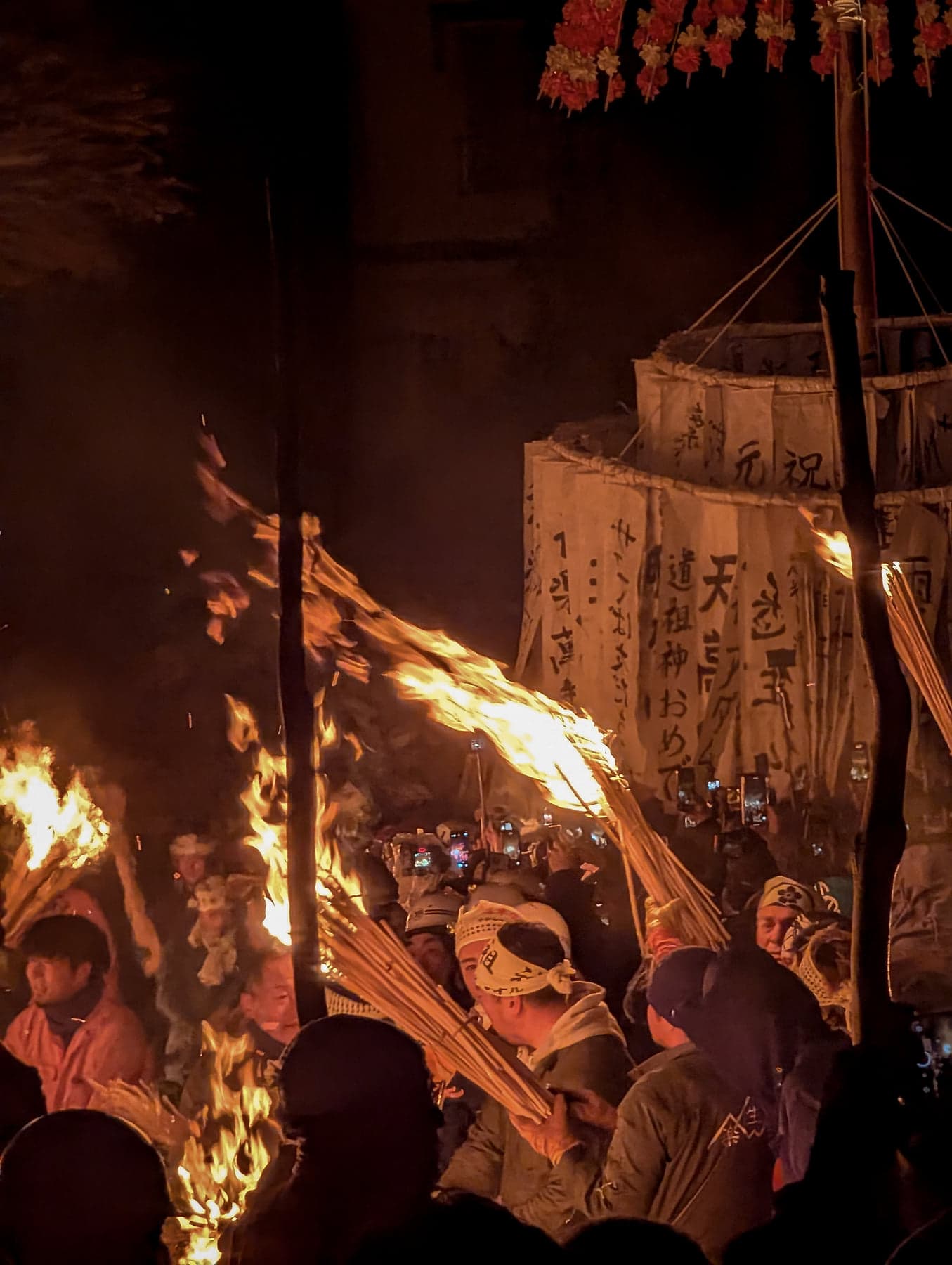
What struck us was the calm on the defenders' faces. On top of the shaden, the 42-year-olds sang, silhouetted against the smoke, their voices carrying out over the crowd even as sparks rose past them. Below, the 25-year-olds held the base, beating back the torches with their boots and their bare hands. They were not performing bravery, they were doing something their fathers had done, and their grandfathers before that, singing in the smoke and waiting.
The fighting lasted about an hour and a half. Waves of attackers with fresh torches, the defenders always outnumbered, always retreating slightly, always holding. Sake flowed in both directions. Men who had been grappling over a burning torch shared a cup minutes later. There was no animosity in any of it. The violence was real (clothes caught fire, eyebrows singed, skin reddened from heat and contact) but the spirit was communal. There was no competition in it, they were doing this together.
Dosojin are the boundary spirits of Japanese villages. They protect the community from disease, disaster, and evil spirits. They guard crossroads and borders. In the ancient Japanese understanding of yaoyorozu no kami, these are not abstract concepts. The dosojin are present. They inhabit the stone markers at the edges of the village, and once a year the village renews its relationship with them through fire.
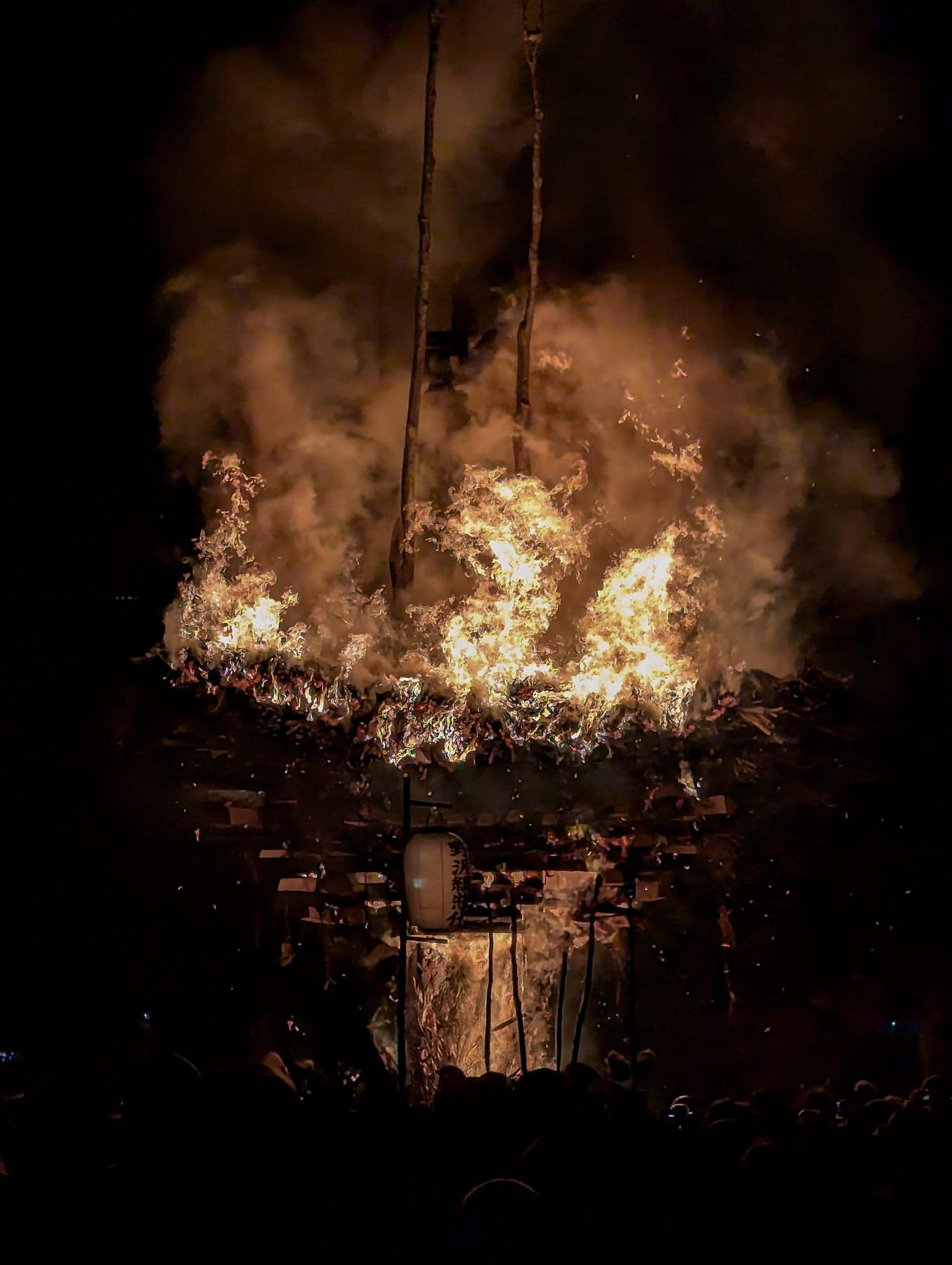
The burning is renewal rather than destruction. The village performs this rite to ward off evil spirits, to pray for a bountiful harvest, and to celebrate the firstborn children of the year. The men in their yakudoshi offer their presence at the shrine as protection against the ill fortune their age is said to carry. The village proves its collective strength by eventually, inevitably, burning the shaden down. By midnight it was a column of flame, forty feet of fire against the black Nagano sky, and every face in the crowd was lit orange.
The collapse was majestic. Forty feet of blazing timber folding in on itself, a column of roaring flame that pushed the crowd back in waves of heat. The shaden fell in stages, each collapse sending fresh geysers of sparks into the black sky. The fire was as beautiful as anything we had seen in Japan. Not the soft, controlled beauty of a tea ceremony or a raked garden, but something older and wilder. The kind of beauty that reminds you fire was sacred long before it was useful.
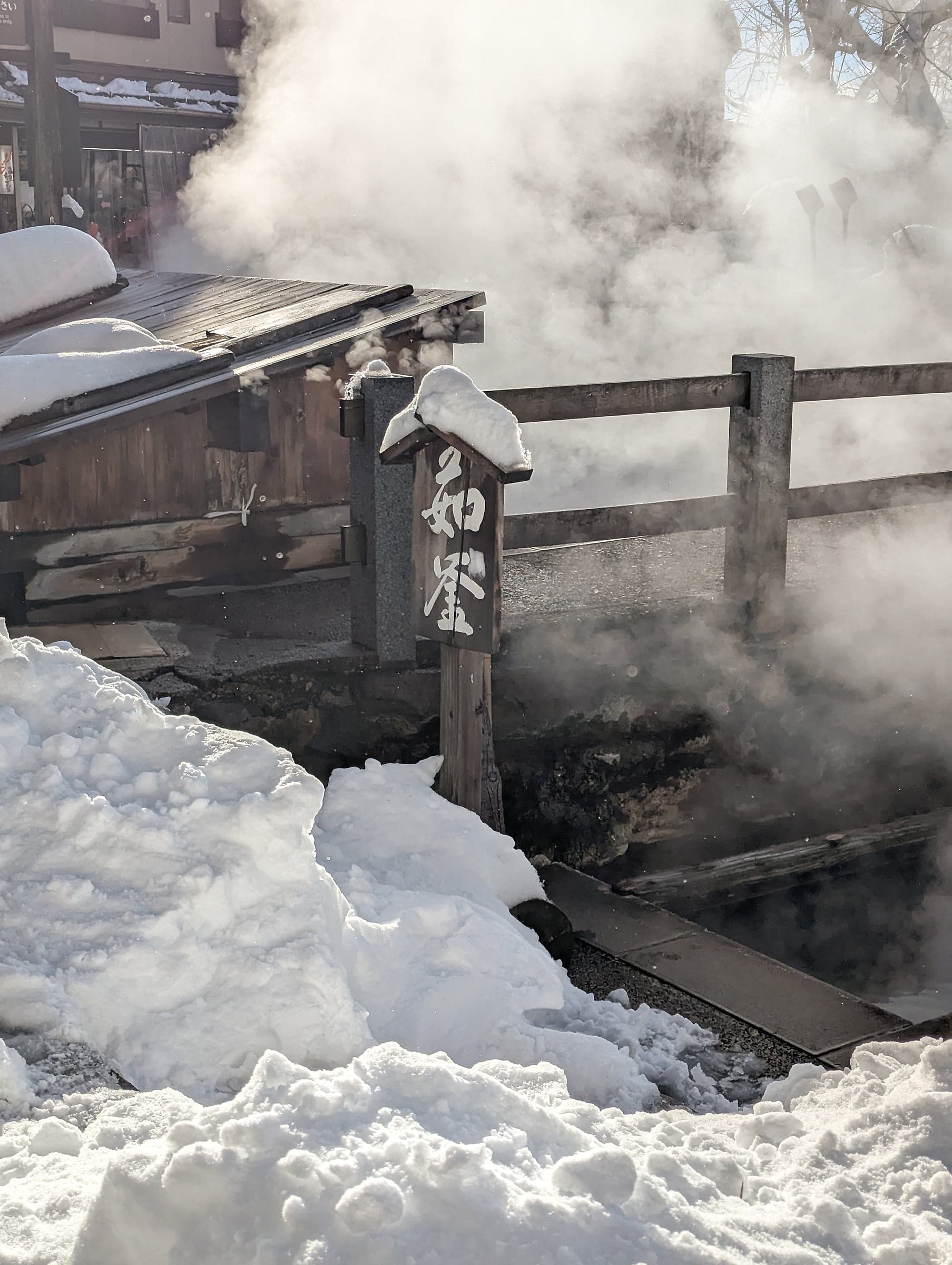
Some drifted home as the flames subsided. Others stayed until the last timbers fell. When we finally walked back through the village, we passed the stone dosojin markers at every intersection, the onsen steam rising from the bathhouses, the darkened ski rental shops and the closed restaurants. The streets smelled of woodsmoke and sulphur. In the morning, the snow where the shaden had stood would be black. By February, fresh snow would cover even that. By next January, they would build it again.
Words & photos
Tom Vining